
Real-time obstacle detection and edge computing in railway transportation
Modern technologies for obstacle detection in railway transportation combine powerful sensors with AI-based real-time processing.
www.advantech.com
(Image: Advantech)
The focus here is on stringent hardware and architecture requirements to enable auton-omous and safe train control.
The automation of railway transportation requires reliable identification of obstacles and hazards in the track area. To achieve this, the systems used must quickly detect and classify objects throughout the entire environment.
This detection requires multimodal sensor systems and highly specialized computer ar-chitectures on the railway vehicle, which allow real-time processing of the data and ena-ble precise assignment of the type, position, and characteristics of the detected objects. Due to the critical latency requirements, the functions must be processed locally on the locomotive or trainset. Only supplementary tasks can be implemented in hybrid edge-cloud architectures. The hardware platforms therefore have to meet special requirements regarding computing power, interface speed, and memory. Processing is increasingly carried out using machine learning (ML) or artificial intelligence (AI).
Obstacle detection is not only necessary for automated driving (Automatic Train Opera-tion / ATO) starting from automation level 2 (GoA / Grade of Automation), but also serves as a driver assistance system to relieve the driver in purely manual operation. To en-hance safety, collision protection is often expanded to include blind spot cameras, sys-tems for identifying traffic signs, and automatic emergency braking intervention.
A wide variety of objects need to be located
The software and hardware systems used must quickly identify static and dynamic ob-stacles. For safety reasons, a maximum time frame of 100 ms applies here. This in-cludes capturing buildings to determine the vehicle's position as well as detecting unau-thorized persons or animals in the vicinity, including their direction of movement.
It is essential to continuously monitor the so-called clearance zone – the area around the track that must be clear for safe train travel – for obstacles or hazards. In addition to peo-ple and animals, these include blockages caused by landslides and fallen trees, broken branches or branches protruding too far into the clearance zone, as well as shopping carts or suitcases rolled off the platform. To complicate matters further, the detection sys-tems must also reliably illuminate curves.
Furthermore, for automated driving according to GoA 4 (fully driverless train operation), track detection is essential. In addition to locating the train via a global satellite naviga-tion system, the position is cross-referenced with digital maps. Even in large rail yards, safe operation requires precise location tracking. In addition, it must be determined whether other railway vehicles are on the same track (which would be dangerous) or on the adjacent track.
The sensor technology is complex
Everything that has been discussed thus far places high demands on software and hardware. When it comes to sensors, system manufacturers usually combine different systems to obtain a complete picture of the surroundings, even in the event of interfer-ence from rain, fog, or smoke. These include:
• LiDAR (Light Detection and Ranging) for a three-dimensional representation of the near and far range. Detection through point cloud processing using density-based clustering algorithms (DBSCAN).
• Radar is used for weather-independent detection and precise speed determination.
• Black-and-white and color cameras, including stereo cameras, support the LiDAR and radar systems in detecting various objects. In this case, identification is based on various computer vision algorithms.
• Ultrasonic sensors for close range.
• Thermal imaging cameras enable the distinction between people or animals and inanimate objects.
Precise time synchronization of the systems is necessary so that the computer can cre-ate a unified representation of the environment using sensor fusion.
The computer modules used for all these tasks must have a high level of computing power, a large and fast memory, and a sufficient number of high-speed interfaces. The requirements will continue to increase over the next few years, as the detection range is to be extended from a few hundred meters to 2000 meters.
Advantech offers hardware solutions
(Image: Advantech)
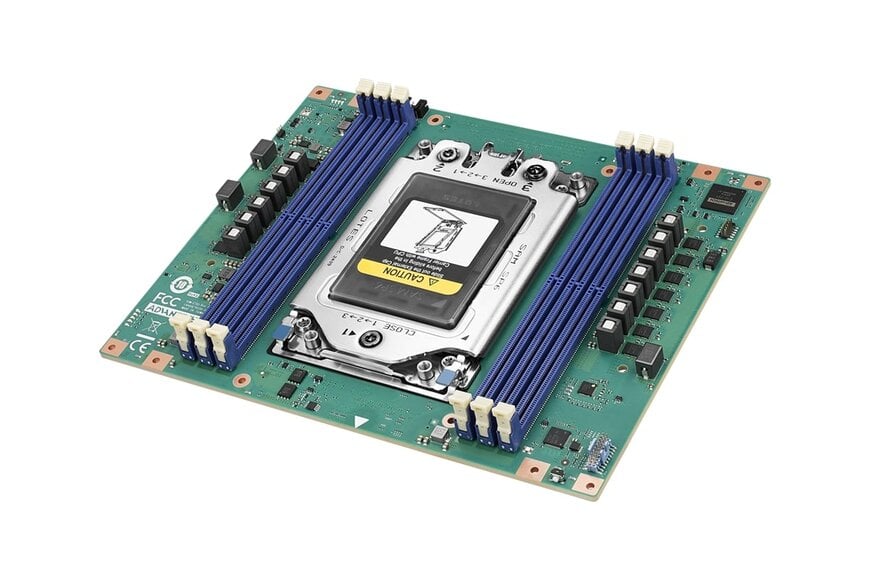
Several solutions are available for the hardware used. For example, Advantech offers a suitable system-on-module with the SOM-E781. This not only has the necessary inter-faces to merge the data streams from various sensor sources, but with the processor from AMD's EPYC™ Embedded 8004 series with up to 64 CPU cores, it also provides sufficient computing power for real-time processing.
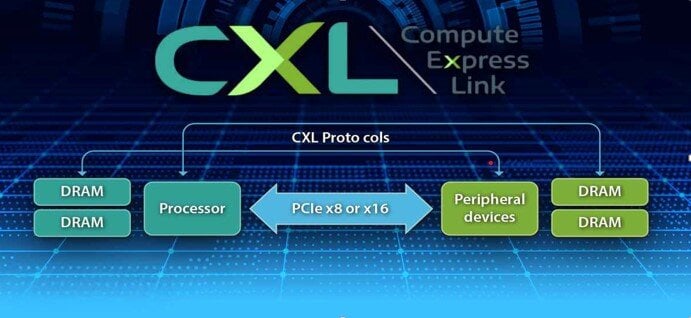
This COM-HPC (Computer-on-Module for High-Performance Computing) matches the dimensions of server size E of the COM-HPC standard and has a proprietary pinout. It has up to 576 GB of RAM and 79 PCIe lanes up to the 5th generation, including 48 CXL 1.1 compliant data lines. There are also a number of input/output extensions such as 2.5 Gbit Ethernet, USB 3.2 Gen 1 interfaces, and SATA 3.0. This means that the SOM-E781 is also suitable for other demanding applications with high data throughput. Based on this platform, engineers can then develop the corresponding solutions themselves.
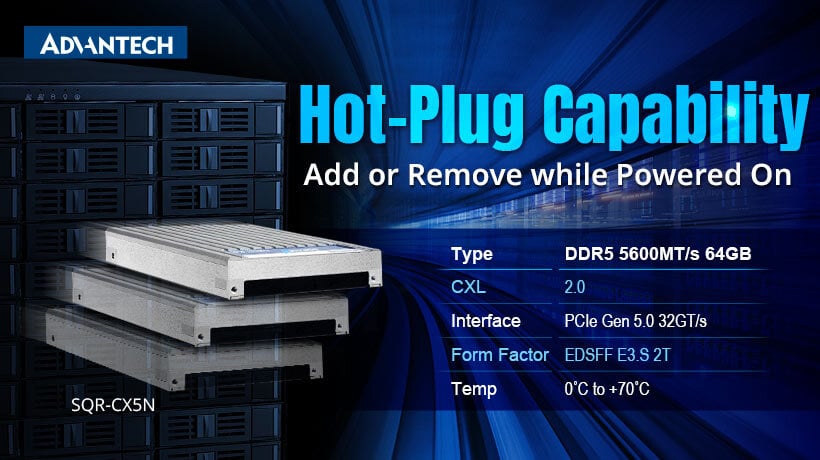
Advantech offers a hot-swappable memory expansion with its SQR-CX5N in the EDSFF E3.S 2T form factor. It has a capacity of 64 GB, is compatible with the CXL standards 1.1 and 2.0, which operate via the PCIe 5.0 interface, and has a maximum transfer rate of 32 gigatransfers per second (GT/s) per lane. The module thus provides the bandwidth re-quired for data-intensive applications.
(Image: Advantech)
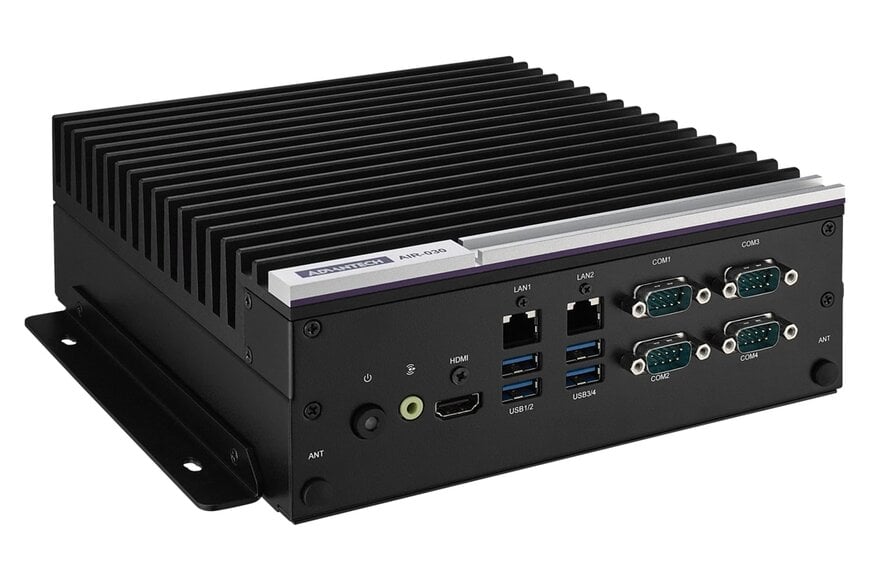
Image: Advantech
An alternative is to use a platform such as Advantech's AI Inference System AIR-030, which is based on the Jetson AGX Orin™ from NVIDIA®. With this module, it is possible to perform AI inference directly on the live feed of a camera. This enables developers to run the latest computer vision algorithms for object detection, classification, and behavior analysis at the edge without having to take the latency-inducing detour via a cloud. This is a critical advantage, especially when it comes to obstacle detection.
The AIR-030 is certified in accordance with IEC 61000-6-4 for industrial environments. It offers three 2.5 Gbit Ethernet interfaces, several USB 3.2 ports, RS-232/RS-422/RS-485 interfaces, digital inputs and outputs, and two CAN bus interfaces. Additional peripherals can be connected via M.2 B or E keys or via an optional PCIe x16 interface. The AIR-030 therefore also meets the requirements for the necessary bandwidth.
About Advantech
With more than 8600 employees worldwide and a 40 year track record the company is a global leader in innovative products, systems, services and solutions for the world of embedded A-IoT. Our strengths in-clude the comprehensive system integration of embedded hardware and software, as well as customer-oriented design-in services for e.g. Industry 4.0 applications, EV charging, green energy, medical devices, digital signage and gaming platforms. A further focus is on Advantech’s local Design & Manufacturing Ser-vices (DMS), including the wide range of options for bespoke adaptation of standard products or the com-pletely new development from scratch, of boards or systems according to customer specifications.
Advantech in Europe
As a leader in the embedded field, Advantech Embedded-IoT group not only delivers a wide range of em-bedded products, solutions and design-in services. With over 25 years of local presence in Europe, the company also offers integrated embedded building blocks and customer-specific adaptations and develop-ments for A-IoT solutions, which include everything from sensor nodes to embedded PCs and gateways to IoT cloud platforms. Over 550 employees in Europe offer Local R&D-, technical-, project-, RMA & business support.
www.advantech.com
