
railway-international.com
06
'26
Written on Modified on
Driver-Assistance Systems Enhance Tram Safety and Urban Operations
Alstom outlines how its driver-assistance technologies support safer, more reliable tram operations across shared urban spaces, strengthening intelligent urban mobility.
www.alstom.com
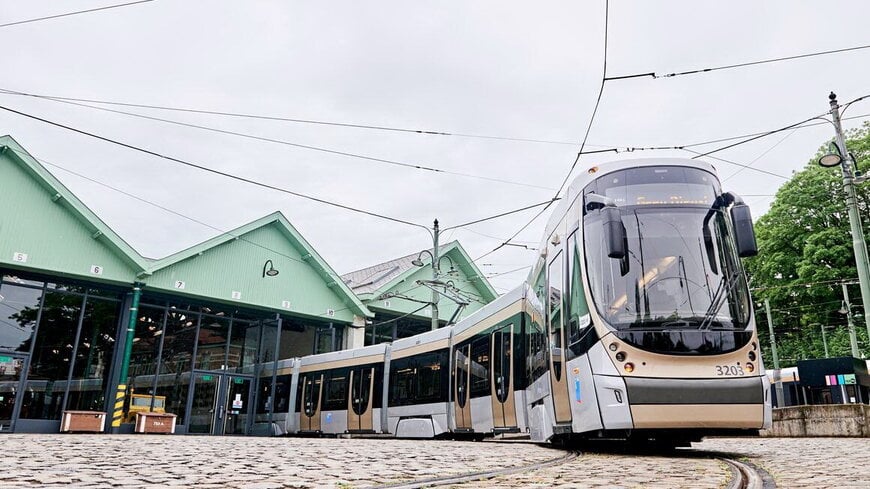
Alstom’s latest driver-assistance systems for trams combine continuous environment sensing with predictive control to reduce collision risk and improve operational safety in complex urban contexts such as mixed traffic corridors and high pedestrian flow zones. These systems are relevant to light rail operators and transport authorities seeking to enhance tram service resilience and safety without full vehicle automation.
Context and Evolution of Tram Safety Technology
Light rail vehicles operate in environments where interactions with pedestrians, cyclists and other road users are frequent and unpredictable. Traditional safety measures—such as operator vigilance and fixed signage—provide baseline hazard mitigation but have limited ability to anticipate dynamic obstacles. To address these limitations, Alstom has developed integrated driver-assistance systems that extend the perception and preventative control capabilities of trams.
Alstom’s Obstacle Detection Assistance System (ODAS) and Collision Prevention Assistance System (COMPAS) form the core of this suite. ODAS, introduced in 2017, was among the first homologated systems globally that continuously scans the vehicle’s path using stereo vision cameras and predictive mapping to identify obstacles such as pedestrians, vehicles, or track debris. Upon detecting a hazard, ODAS issues auditory and visual alerts to the driver and, if required, applies controlled braking to avoid impact.
COMPAS builds on this foundation by incorporating location awareness and predefined track geometry into its control logic. With this added context, the system enforces safe speed profiles through curves and constrained sections of the network, helping prevent overspeed conditions that could lead to derailments or loss of control. The combination of real-time obstacle detection and dynamic speed governance responds to operational safety demands in densely built environments.
Technical Relevance and Application
These systems leverage machine vision and predictive control rather than full automation, positioning them as advanced driver-assistance rather than autonomy solutions. They can be retrofitted to existing tram fleets or integrated into new vehicles, enabling operators to upgrade safety capabilities without complete fleet renewal. Both ODAS and COMPAS function in real-time to support the human driver, preserving manual control while reducing the risk of accidents.
In practical deployment, this approach addresses several specific challenges: avoiding collisions with unexpected obstacles, maintaining safe speeds through complex track geometries, and mitigating rear-end impacts in dense networks. By reinforcing the operator’s situational awareness and vehicle response, these systems contribute to lowered incident rates and improved operational predictability—key metrics for urban transit performance and public confidence.
Integration and Urban Mobility Impact
Both ODAS and COMPAS are designed to operate across a wide range of light rail platforms, making them applicable beyond Alstom’s own Citadis tram families. This flexibility aligns with broader trends in the digital supply chain for urban transport, where interoperability and modular safety technologies support diverse fleet compositions and legacy systems.
By enhancing real-time perception and control without requiring full automation, these driver-assistance systems reflect an intermediate stage in the evolution of intelligent urban mobility. They respond to the immediate need for risk mitigation in shared transport environments while accommodating incremental investment and system upgrades by operators.
Alstom’s driver-assistance technologies illustrate a practical application of sensor-based hazard detection and predictive control in light rail operations. By augmenting driver awareness and enforcing context-aware safety limits, ODAS and COMPAS contribute measurable safety enhancements for trams operating in complex urban landscapes. Their retrofit capability and compatibility with existing fleets support scalable safety improvements for urban transit authorities and operators.
www.alstom.com
