
railway-international.com
17
'26
Written on Modified on
Vossloh Supplies High-Speed Grinding Train for Rail Maintenance
Preventive rail maintenance technology supports network reliability and capacity expansion across China’s growing high-speed rail infrastructure.
www.vossloh.com
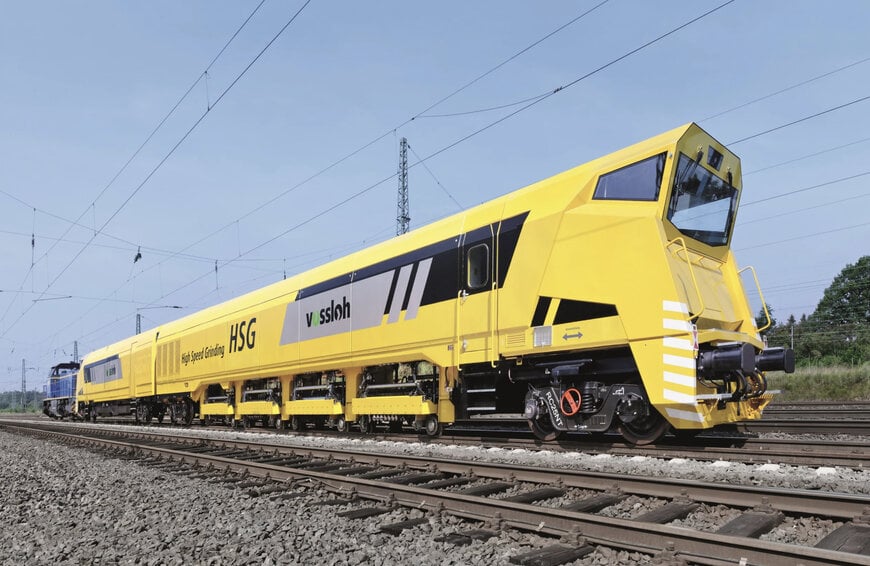
For high-speed rail networks, maintaining track quality under heavy traffic loads is essential to ensure safety, availability, and long-term performance. Vossloh AG is supporting this requirement with the delivery of a new high-speed grinding train to China, reinforcing the role of preventive rail maintenance in large-scale rail operations.
The HSG-2 (High Speed Grinding) train will be manufactured in Hamburg and is scheduled for shipment in summer 2027. Designed for continuous operation at higher speeds than conventional grinding systems, the train enables maintenance work without significantly disrupting rail traffic.
How high-speed grinding supports preventive maintenance
Unlike corrective maintenance, which addresses defects after they occur, high-speed grinding is used as a preventive method to maintain rail surface quality before damage develops. This process reduces wear, mitigates rolling contact fatigue, and helps extend rail service life.
The HSG-2 system operates at higher working speeds compared to traditional grinding trains, allowing maintenance to be performed during normal rail operations. This reduces downtime and avoids the need for extended track closures—an important factor for heavily used high-speed corridors.
In China, this approach has already been widely adopted. High-speed grinding technology is currently used by 12 of the country’s 18 regional railway administrations, reflecting its integration into routine maintenance strategies.
Deployment across one of the world’s largest rail networks
China’s high-speed rail network, spanning approximately 50,000 kilometers, is the largest globally and continues to expand, with projections exceeding 70,000 kilometers by 2035. Maintaining such a network requires scalable and efficient maintenance solutions.
Preventive grinding has been applied extensively across the network. In a recent year alone, around 42,000 kilometers of track were treated, including high-traffic routes such as the Beijing–Shanghai line. These operations demonstrate the ability of high-speed grinding systems to handle large volumes of track while maintaining consistent quality.
Operational advantages for high-traffic rail corridors
The use of high-speed grinding trains provides several operational benefits for rail operators. By maintaining rail profiles proactively, the technology helps reduce noise, vibration, and component wear, contributing to improved ride quality and lower lifecycle costs.
For high-speed lines where traffic density is high, the ability to perform maintenance without interrupting service is particularly valuable. This supports higher network availability and reduces the logistical complexity associated with scheduling maintenance windows.
Positioning within rail maintenance technologies
Rail grinding is a well-established maintenance method, with conventional grinding trains and milling systems widely used across global rail networks. However, these systems often require slower operation speeds and dedicated track possession.
High-speed grinding systems such as the HSG-2 differ by enabling preventive maintenance at operational speeds, making them better suited for high-density, high-speed rail environments. This positions them as a complementary solution to traditional grinding and milling technologies, particularly for networks prioritizing continuous operation.
Strengthening long-term maintenance strategies
The continued adoption of high-speed grinding in China reflects a broader shift toward preventive maintenance strategies in rail infrastructure. By addressing wear before it leads to defects, operators can improve reliability while managing long-term costs.
With the upcoming delivery of the HSG-2 train, Vossloh AG is contributing to the expansion of maintenance capacity within one of the world’s most extensive rail networks, supporting its growth and operational performance.
Edited by Industrial Journalist, Natania Lyngdoh — AI-Powered.
www.vossloh.com
