
railway-international.com
24
'26
Written on Modified on
5G Standalone Network Advances Railway Communications
Nokia and Deutsche Bahn deploy 1900 MHz 5G SA network to support FRMCS and enable real-time, mission-critical rail operations.
www.nokia.com
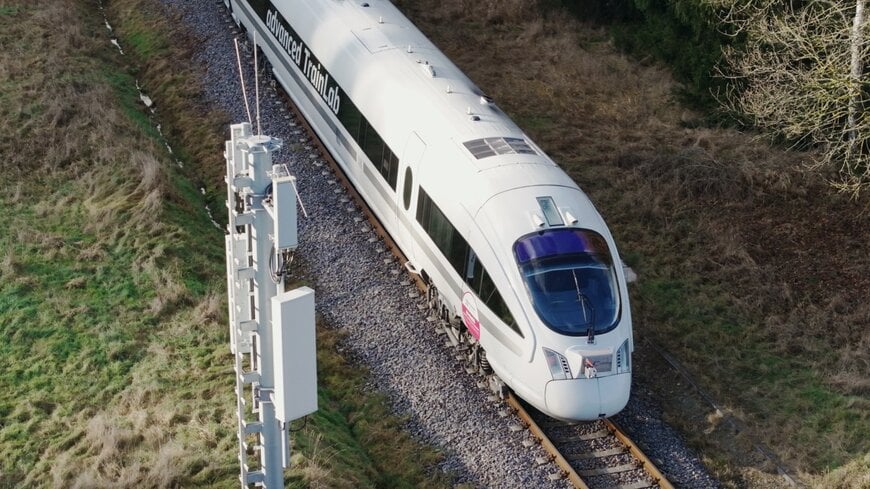
Nokia and Deutsche Bahn (DB) have deployed a 1900 MHz (n101) 5G Standalone (SA) radio network on live railway test tracks in Germany. The system is designed to support the transition from legacy GSM-R communications to the Future Railway Mobile Communication System (FRMCS), enabling real-time, mission-critical connectivity for modern rail operations.
Transition from GSM-R to 5G-Based FRMCS
Railway communication systems are evolving from GSM-R, which has been the standard for decades, toward FRMCS, a 5G-based framework designed to meet the requirements of digital and automated rail networks.
The deployed solution operates on a frequency band dedicated to railway communications in Europe, providing a foundation for interoperable and standardized next-generation connectivity across the sector.
Technical Architecture and Deployment
The network combines Nokia’s AirScale radio equipment operating in the 1900 MHz (n101) band with a 5G SA core. The standalone architecture enables low-latency communication and supports advanced applications without reliance on legacy network infrastructure.
The system is deployed at DB’s digital railway test field in the Ore Mountains (Erzgebirge), where it operates on live trains under real conditions. The setup includes features such as failover mechanisms, self-healing capabilities, and real-time monitoring to ensure high availability.
Supporting Real-Time and Mission-Critical Applications
FRMCS is designed to support a wide range of applications, including train control, signaling, and operational communication. The low latency and reliability of 5G SA networks enable real-time data exchange between trains and infrastructure.
This capability is essential for higher levels of automation, increased network capacity, and improved service reliability.
Integration with European Rail Initiatives
The deployment will also support the FP2-MORANE-2 project, which aims to advance FRMCS implementation across Europe. This initiative builds on earlier research and testing programs, focusing on interoperability and large-scale deployment of 5G-based railway communication systems.
Migration and Interoperability Considerations
The solution is designed to enable a gradual migration from GSM-R to FRMCS, ensuring continuity of operations during the transition. Compatibility with existing systems and phased implementation are critical to maintaining service reliability across rail networks.
Relevance for Digital Rail and Connectivity
The adoption of 5G SA networks in rail infrastructure reflects a broader shift toward digital railway systems. High-performance communication networks are essential for enabling automation, predictive maintenance, and real-time operational management.
Within a digital supply chain, such connectivity supports improved coordination between assets, enhanced safety, and more efficient use of rail infrastructure, contributing to increased capacity and sustainability in rail transport.
www.nokia.com
