
railway-international.com
31
'26
Written on Modified on
ERTMS Level 2 Upgrade Enhances Regional Rail Operations
Progress Rail delivers advanced train control systems for the Merano–Malles line, enabling safer, more efficient, and interoperable rail operations in collaboration with STA.
www.progressrail.com
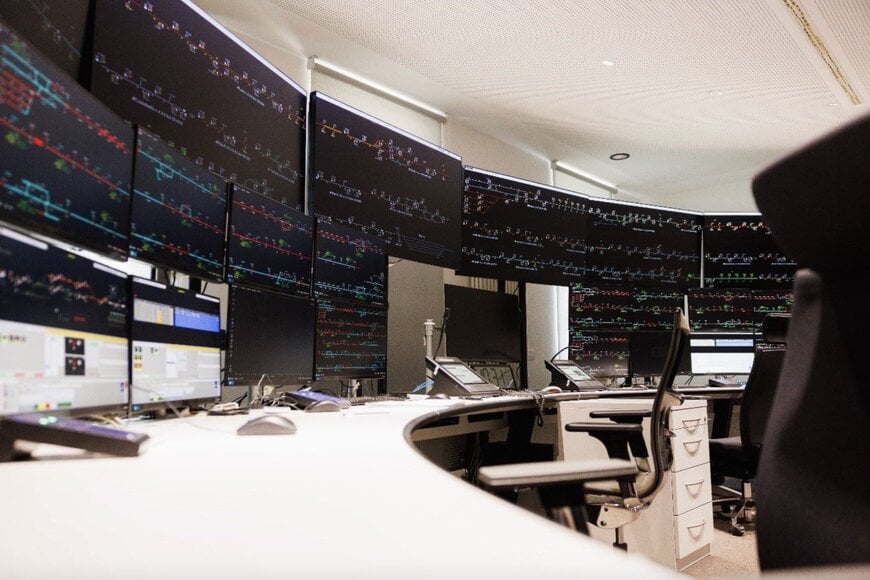
Progress Rail, a subsidiary of Caterpillar, has implemented a signaling and control upgrade on the Merano–Malles railway in South Tyrol in partnership with Strutture Trasporto Alto Adige. The project introduces European Railway Traffic Management System Level 2 (ERTMS Level 2), marking the first deployment of this standard on a regional railway line in Italy.
Continuous train control and digital signaling
ERTMS Level 2 replaces traditional trackside signaling with a digital communication-based system that continuously transmits movement authority and speed data between trains and control centers. This enables real-time supervision of train operations and reduces reliance on physical signals along the track.
The system improves operational safety by ensuring that train speed and positioning are constantly monitored and controlled. It also supports higher line capacity by enabling more precise train spacing and reducing headways.
Integrated infrastructure and traffic management systems
The upgrade includes several interconnected subsystems that support centralized and automated railway operations. A track management system provides control over infrastructure functions, including command execution and emergency handling. A train detection system enables continuous and accurate train positioning, forming the basis for safe ERTMS operation.
In addition, a traffic management system coordinates train movements across the network, improving timetable adherence and operational regularity. Together, these systems enable more efficient use of infrastructure and enhance overall service reliability.
Operational efficiency and lifecycle optimization
The transition to digital signaling contributes to reduced operating and maintenance costs by minimizing the need for physical trackside equipment. Centralized control systems simplify maintenance workflows and reduce the frequency of field interventions.
Improved traffic coordination and optimized train movements can also contribute to lower energy consumption, supporting more sustainable railway operations. These benefits align with broader objectives of increasing efficiency while reducing environmental impact.
Role in electrification and regional mobility strategy
The ERTMS deployment is part of a wider modernization program for the Merano–Malles line, including ongoing electrification efforts. Digital train control systems are a key enabler of these upgrades, ensuring compatibility with modern rolling stock and supporting higher service quality.
Edited by Romila DSilva, Induportals Editor, with AI assistance.
