
railway-international.com
22
'26
Written on Modified on
ERTMS Trackbot deployment for railway signaling installation
ERTMS Northern Lines project deploys Trackbot and Reality Model in the Netherlands to automate balise installation and support rollout of next-generation railway signaling systems.
strukton.com
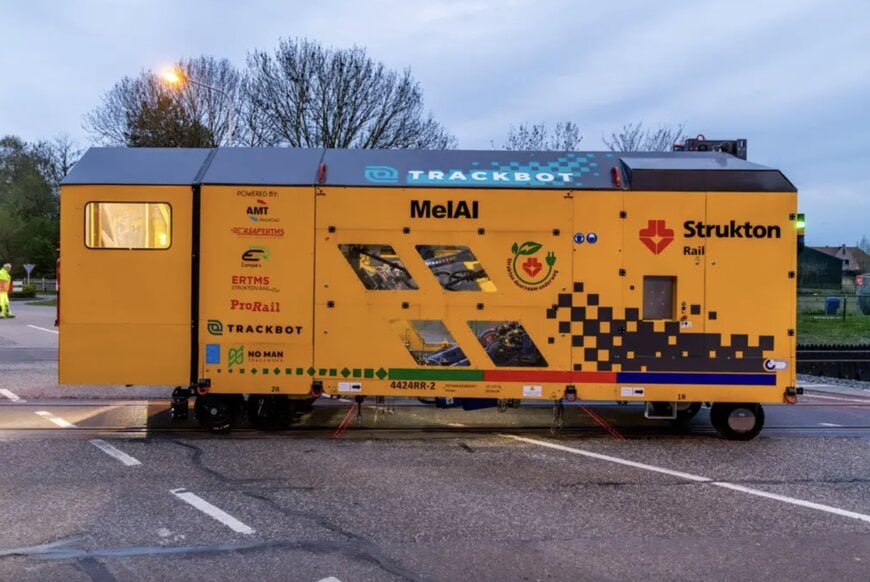
State Secretary Annet Bertram (Public Transport and the Environment) conducted a working visit to Franeker on April 15, 2026, to oversee the first real-world application of the ERTMS Trackbot. This autonomous robotic system, developed in collaboration with ProRail under the ASAP ERTMS programme, is designed to modernize the installation of the European Rail Traffic Management System (ERTMS). The successful completion of the initial deployment week marks a transition from laboratory testing to operational integration on the Leeuwarden – Harlingen Haven line.
Robotic Installation and the Reality Model
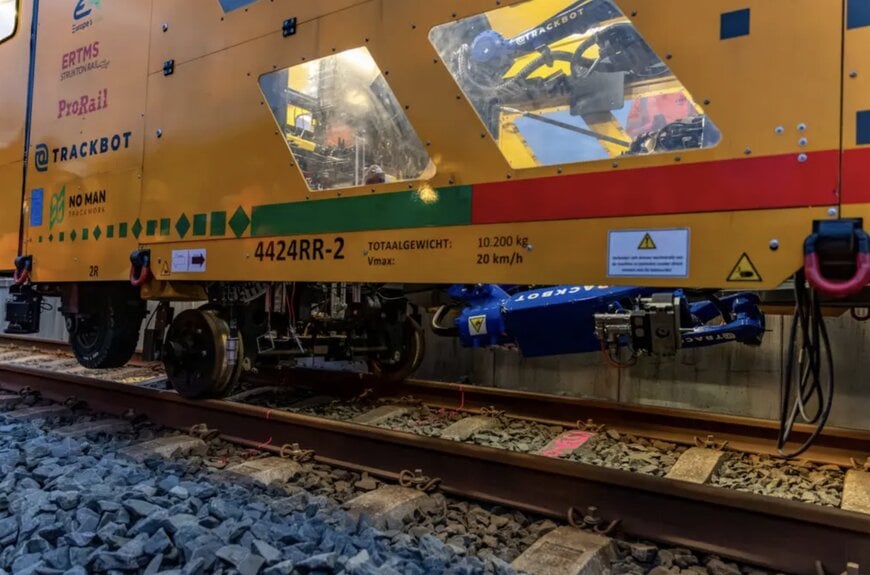
The ERTMS Trackbot functions as a specialized automation tool that installs balises—electronic beacons essential for wireless train communication—directly into the track bed. To navigate the physical environment, the bot utilizes a "Reality Model," a high-fidelity digital twin of the rail infrastructure developed over a six-year period. This integration allows the robot to place hardware with precision while adhering to the strict safety and technical standards required for the latest generation of ERTMS.
The development of these technologies involved a multi-partner ecosystem including:
- Strategic Partnerships: AMT Group Breda and No Man Trackwork.
- Innovation Initiatives: Europe’s Rail (European innovation initiative).
- Technical Integration: Collaboration with system suppliers Alstom and Hitachi, as well as engineering support from Arcadis.
Infrastructure Modernization and Pilot Rollout
The Leeuwarden – Harlingen Haven line serves as the primary test section for commissioning this new infrastructure. Unlike legacy systems, the latest ERTMS generation will eventually facilitate wireless communication between trains and trackside equipment, removing the need for traditional fixed signaling. Currently, technical teams are utilizing the Trackbot to install balises and subterranean cabling to support this wireless architecture.
The technical data gathered during this pilot will dictate the deployment strategies for subsequent sections, including the province of Zeeland and additional Northern Lines in Fryslân and Groningen. By automating the placement of beacons, the project aims to reduce manual labor risks and increase the speed of system implementation across the national automotive data ecosystem of rail transport.
Efficiency Gains in Rail Sustainment
The primary technical justification for the Trackbot is the reduction of complexity in large-scale infrastructure projects. Traditionally, balise placement required significant manual labor and track-access time. The autonomous bot enables:
The Leeuwarden – Harlingen Haven line serves as the primary test section for commissioning this new infrastructure. Unlike legacy systems, the latest ERTMS generation will eventually facilitate wireless communication between trains and trackside equipment, removing the need for traditional fixed signaling. Currently, technical teams are utilizing the Trackbot to install balises and subterranean cabling to support this wireless architecture.
The technical data gathered during this pilot will dictate the deployment strategies for subsequent sections, including the province of Zeeland and additional Northern Lines in Fryslân and Groningen. By automating the placement of beacons, the project aims to reduce manual labor risks and increase the speed of system implementation across the national automotive data ecosystem of rail transport.
Efficiency Gains in Rail Sustainment
The primary technical justification for the Trackbot is the reduction of complexity in large-scale infrastructure projects. Traditionally, balise placement required significant manual labor and track-access time. The autonomous bot enables:
- Higher Precision: Accurate placement based on pre-mapped Reality Model coordinates.
- Operational Speed: Continuous deployment cycles that reduce total project duration.
- Data Integration: Immediate digital logging of installed assets into the ProRail management system.
Following the successful April trials, technical operations are scheduled to resume at the beginning of July 2026 to continue the rollout across the remaining Northern Lines.
Edited by Romila DSilva, Induportals Editor, with AI assistance.
Edited by Romila DSilva, Induportals Editor, with AI assistance.
