
ROCENTER: Automated Turnout Restoration by ROBEL Rail Automation
ROCENTER by ROBEL Rail Automation operates at a high level of fully automated switch restoration, supported by a dedicated Switch Laboratory where process development takes place under controlled conditions before being transferred directly to the ROBOT machine for on-track applications.
www.robel.com
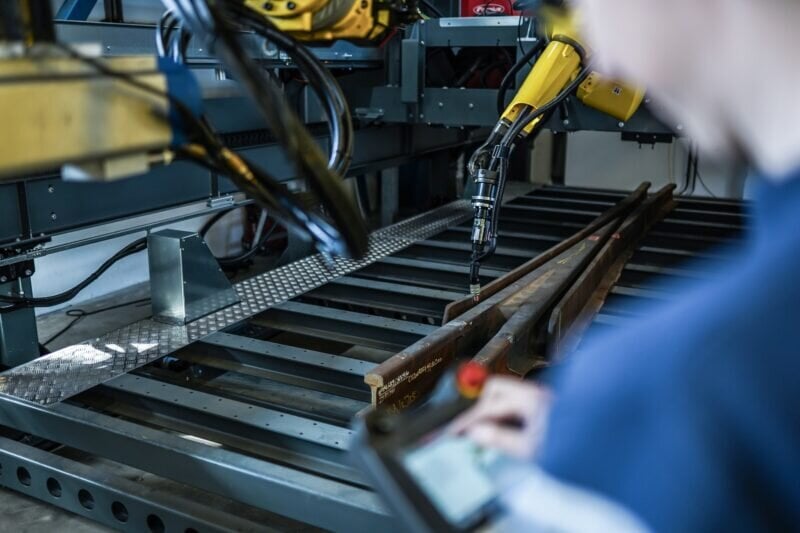
The integrated process combines scanning, milling, welding and reprofiling technologies to ensure reproducible quality, precise parameter control and reliable maintenance performance under demanding railway operating conditions.
The system is designed for high-performance, standard-compliant repair and build-up welding of turnouts in R350HT and Mn13, including precise reprofiling of turnout transition geometries. Automated workflows enable consistent refurbishment quality while reducing manual intervention and improving repeatability during maintenance operations. The technology is particularly suited for heavily stressed switch components and wear-intensive rail applications.
Inductive preheating can reduce preheating times by up to 50%, while advanced milling technology enables higher precision with milling times reduced by up to 75%. In addition, ROCENTER performs machining and welding for switches and wear parts made from manganese steel and other high-wear materials, supporting demanding rail maintenance applications with efficient and repeatable processes. A pull-out fixing frame for processing areas of up to 8 m × 3.5 m enables the handling and precise positioning of large turnout components during automated refurbishment. The modular system concept also supports digitally controlled and economically efficient turnout refurbishment.
By combining several refurbishment processes within a single automated system, ROCENTER helps reduce maintenance complexity and supports shorter track possession times. Digitally controlled workflows and reproducible process parameters improve operational reliability while ensuring consistent maintenance quality across demanding railway infrastructure applications. The system is therefore well suited for modern rail networks requiring efficient, high-precision refurbishment of heavily stressed turnout components under challenging operating conditions.
www.robel.com
