
railway-international.com
24
'26
Written on Modified on
voestalpine presents Keyway Tie at InnoTrans 2026
Keyway Tie features an integrated fastening system and combines the advantages of concrete and wood in a single solution.
www.voestalpine.com
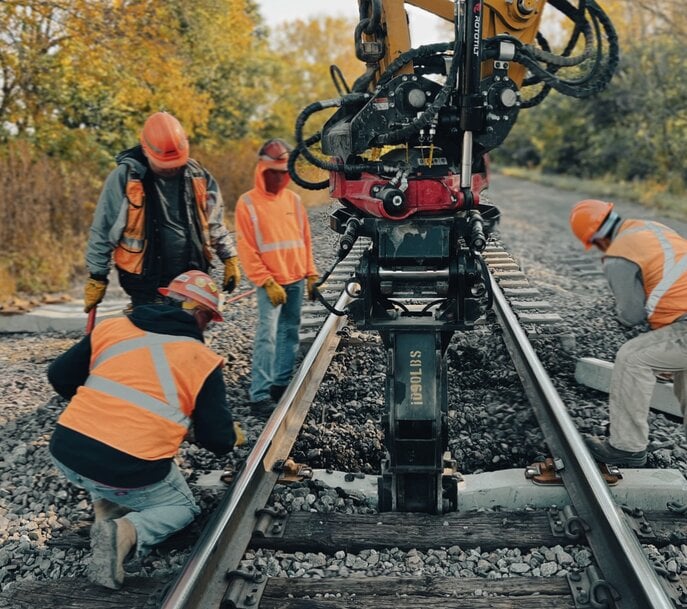
voestalpine Railway Systems will present the Keyway Tie at InnoTrans 2026 (22-25 September). The concrete sleeper is developed specifically for individual replacement of sleepers in existing wooden sleeper tracks, incorporating an integrated fastening system to enable phased track modernization.
Individual Replacement and Track Integration
The Keyway Tie is engineered for application on railway lines equipped with wooden sleepers across freight, urban, and mixed traffic operations. The sleeper is installed directly between existing wooden sleepers without requiring modifications to adjacent track infrastructure.
Deployment utilizes standard track construction and maintenance equipment. This allows railway operators to execute gradual conversions from wood to concrete sleepers across existing networks, avoiding full track section replacements or prolonged operational line closures.
Mechanical Properties and Operational Features
The product combines the structural stability and service life of concrete with the operational flexibility and running characteristics of wooden sleepers. The design offers several performance and maintenance characteristics:
- Direct Installation: Fits into existing wooden sleeper track configurations.
- Track Stability: Increases overall track stability and extends the service life of track components.
- Wear Reduction: Reduces mechanical wear on adjacent wooden sleepers and lowers ongoing maintenance requirements.
- Adjustable Parameters: Features an adjustable track gauge to accommodate varying track conditions and adjustable tie stiffness for specific track locations, such as transition zones or bridges.
- Load Capacity: Maintains durability under heavy axle loads.
By stabilizing track geometry and supporting step-by-step infrastructure upgrades, the system is designed to improve network reliability. voestalpine Railway Systems will demonstrate the track solution at InnoTrans 2026 in Berlin, Germany, from September 22 to 25, 2026.
Additional Context
This section details technical specifications not included in the original news release.
Replacing individual wooden sleepers with conventional concrete sleepers creates localized mechanical transition issues known as "hard spots." Because concrete possesses a significantly higher bending stiffness and dynamic bedding modulus than timber, placing a single rigid sleeper into a flexible wooden trackbed generates dynamic wheel-rail impact loads. These dynamic forces accelerate ballast degradation, increase rail wear, and cause differential track settlement.
The Keyway Tie mitigates these impact forces through engineered elastic components, such as elastomeric rail pads and under-sleeper pads. By tuning the vertical static and dynamic stiffness beneath the rail seat and sleeper base, the unit's overall vertical compliance is matched to the adjacent wooden track profile. Additionally, the integrated fastening assembly utilizes adjustable guide plates or eccentric inserts to allow micro-adjustments to the track gauge, accommodating lateral gauge widening on aged wooden track sections without requiring ballast reconstruction.
Edited by Romila DSilva, Induportals Editor, with AI assistance.
Additional Context
This section details technical specifications not included in the original news release.
Replacing individual wooden sleepers with conventional concrete sleepers creates localized mechanical transition issues known as "hard spots." Because concrete possesses a significantly higher bending stiffness and dynamic bedding modulus than timber, placing a single rigid sleeper into a flexible wooden trackbed generates dynamic wheel-rail impact loads. These dynamic forces accelerate ballast degradation, increase rail wear, and cause differential track settlement.
The Keyway Tie mitigates these impact forces through engineered elastic components, such as elastomeric rail pads and under-sleeper pads. By tuning the vertical static and dynamic stiffness beneath the rail seat and sleeper base, the unit's overall vertical compliance is matched to the adjacent wooden track profile. Additionally, the integrated fastening assembly utilizes adjustable guide plates or eccentric inserts to allow micro-adjustments to the track gauge, accommodating lateral gauge widening on aged wooden track sections without requiring ballast reconstruction.
Edited by Romila DSilva, Induportals Editor, with AI assistance.
