
railway-international.com
03
'26
Written on Modified on
Friction Reduction Technologies for High-Speed Railway Powertrain Systems
SKF has developed a new range of hybrid ceramic bearings and polymer cages designed to minimize energy consumption across modern rolling stock.
www.skf.com
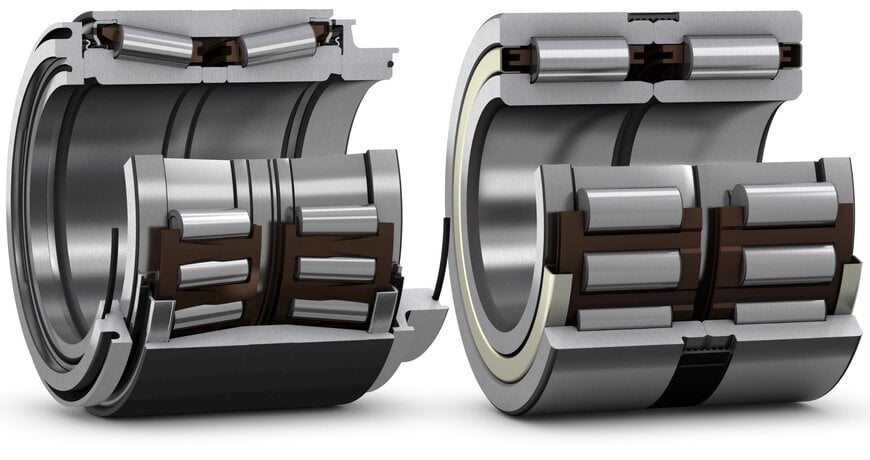
SKF is releasing a series of low-friction components, including hybrid ceramic wheelset bearings and polymer-caged cylindrical roller bearings. These mechanical solutions are engineered to reduce energy consumption and extend maintenance intervals in high-speed rail and continuous metro transit applications.
Mitigating Energy Loss in Railway Powertrains
Approximately 20% of global energy consumption in mechanical systems is utilized to overcome friction. In the rail sector, where multiple bearings are deployed across a single train, mitigating bearing friction directly reduces overall energy demand. At the InnoTrans 2026 trade show, scheduled for September 22–25 in Berlin, Germany, the company will present components that utilize optimized macro-geometry, surface finishes, and grease distribution to lower frictional resistance. Understanding the physical phenomena within rolling bearings allows engineers to apply targeted modifications that improve the overall efficiency of the rolling stock.
Hybrid Ceramic Rolling Units for Wheelsets
The core of the hardware portfolio is a high-speed wheelset bearing based on a hybrid ceramic rolling unit (CRU) architecture. By replacing traditional steel with silicon nitride rollers, the bearing mass is reduced by 15% to 20%. This material substitution prevents electrical current damage and reduces friction by at least 10% compared to conventional steel bearings. For applications such as high-speed rail and 24-hour metro networks, this reduction translates into extended grease life, prolonged maintenance intervals, and lower lifecycle costs due to decreased wear on the contact surfaces.
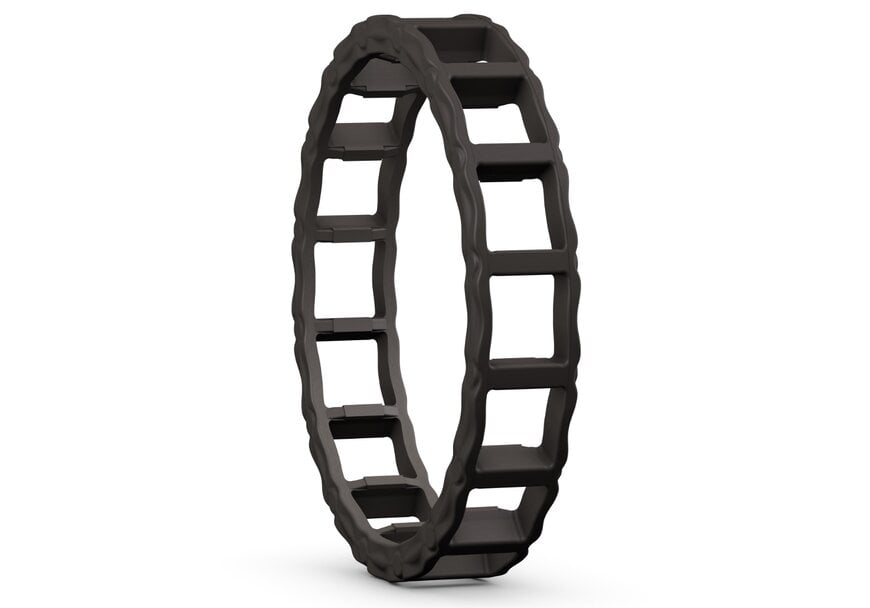
PEEK Polymer Cages for Gearbox Bearings
As drivetrains become more compact, components must maintain performance within reduced spatial footprints. To address this structural requirement, cylindrical roller bearings (CRBs) for railway gearboxes have been equipped with cages manufactured from polyether ether ketone (PEEK). This advanced, low-friction polymer is up to 90% lighter than standard brass equivalents while maintaining the mechanical strength necessary to withstand harsh, dynamic loads.
PEEK operates reliably across a temperature range of –70°C to 240°C. In addition to reducing friction and power loss, the polymer material eliminates the need for lead in the final product. Jochen Baum, Railway Engineering Manager for Europe and Africa, noted that the components are developed to maintain reliable operation and extended service intervals, cutting energy loss without introducing mechanical complexity to the gearbox.
Modular Lubrication for Wayside and Onboard Infrastructure
Complementing the friction-reduction hardware, the Lincoln Progressive Lubrication Pump (PLP) functions as an automated maintenance system. This modular device supports up to three pump elements to accommodate varying operational requirements across both onboard and wayside configurations. Built with reservoir capacities ranging from 2 to 20 liters, the pump integrates smart monitoring technologies that provide real-time status updates and diagnostics, ensuring continuous and precise grease distribution to critical powertrain components.
Additional Context
This section details technical specifications and competitive benchmarking not included in the original news release.
In the railway bearing market, hybrid ceramic wheelset bearings compete directly with similar offerings from manufacturers such as Schaeffler and NSK. A key benchmark for these components is the electrical insulation capability to prevent electrical pitting—a phenomenon where stray currents cause micro-cratering on bearing raceways. While standard steel bearings require external insulating coatings, such as aluminum oxide, which can degrade over time, the use of silicon nitride rolling elements provides inherent, permanent galvanic isolation. Furthermore, compared to traditional brass-caged bearings used in high-vibration traction motors and gearboxes, PEEK-caged bearings are evaluated on their ability to resist centrifugal forces at high rotational speeds. This reduces the overall inertia of the cage and minimizes sliding wear on the rolling elements during rapid acceleration and deceleration phases.
Edited by Aishwarya Mambet, Induportals Editor, with AI assistance.
www.skf.com
