
railway-international.com
17
'26
Written on Modified on
EULYNX Object Controllers Target Digital Railway Signalling
voestalpine Railway Systems has developed a common platform for safety-certified control and monitoring of railway field elements, supporting standardized signalling interfaces and cybersecurity.
www.voestalpine.com
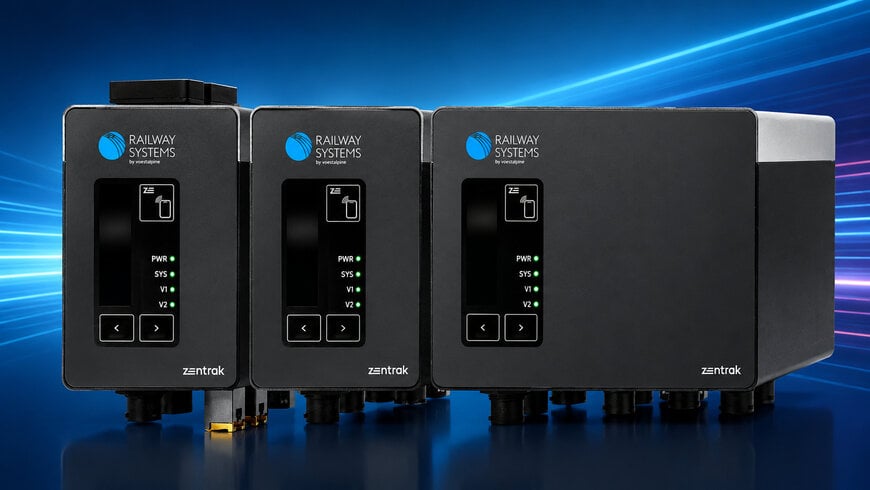
Railway signalling is moving toward architectures in which trackside assets can be controlled through standardized digital interfaces rather than tightly coupled proprietary systems. voestalpine Railway Systems’ Object Controller Platform, UniOC, applies this approach across train detection, points, light signals, generic inputs and outputs, and level crossings, combining safety-related functions, diagnostics and cybersecurity within a common platform architecture.
EULYNX interfaces for interoperable railway signalling
EULYNX defines standardized interfaces between interlocking systems and field elements, with the objective of reducing dependency on proprietary interfaces and enabling components to evolve more independently. Its Baseline Set 4 specifications cover interfaces including SCI, SDI and SMI for control, diagnostic and maintenance functions. Baseline Set 4 Release 4, published in 2025, is described by EULYNX and the EU-Rail System Pillar as a stable specification set for current investments and migration toward the future railway target architecture.
For infrastructure managers, this architecture can support a more modular digital signalling environment. A field element can have its own object controller, communicating with higher-level signalling systems through standardized interfaces. EULYNX documentation defines an object controller as a device that exchanges commands, information and power with one or a few individual field objects such as signals or points.
Common architecture across multiple field elements
UniOC uses a platform-based approach instead of developing a separate control architecture for every signalling application. The platform variants share an underlying operating environment, diagnostics framework, cybersecurity functions and safety-related components.
The application-specific modules are intended to address different trackside functions. UniAC[2] provides the object-controller function for train detection based on axle counting. UniOC[P] controls and monitors railway points. UniOC[IO] provides standardized safety-related digital inputs and outputs, while UniOC[LS] addresses light-signal control and monitoring. UniOC[LC] integrates level-crossing functions including barrier control, flashing warning lights and audible warning devices.
This common architecture can reduce duplication in platform development and validation because common communication and system functions can be reused across different applications. voestalpine Railway Systems has also described an in-house EULYNX simulation environment used to test communication processes and system behaviour across its object-controller product family.
Safety certification for point control
A key milestone cited by voestalpine Railway Systems is UniOC[P], which became, in 2025, the first EULYNX Baseline 4 Release 3-compliant object controller in Europe to receive CENELEC SIL4 certification from TÜV SÜD, according to the company.
Safety Integrity Level 4 is the highest integrity level defined within the CENELEC railway functional-safety framework. For railway signalling, standards including EN 50126, EN 50128 and EN 50129 address RAMS, software and safety-related electronic systems.
The technical significance of the certification is therefore linked to the controller’s use in safety-related point applications rather than simply to its compliance with a communications standard. EULYNX defines the interfaces and system architecture, while CENELEC safety processes address the functional-safety properties required for railway applications.
Cybersecurity integrated into the controller architecture
The UniOC platform also incorporates cybersecurity mechanisms directly into its architecture. This is relevant because digital object controllers introduce networked communication between field devices and higher-level signalling systems.
EULYNX Baseline Set 4 Release 4 is aligned with the Cybersecurity Specification V1.0 published by the EU-Rail System Pillar. The specification work is part of the broader effort to standardize digital signalling interfaces while addressing security requirements for railway systems.
Integrating security functions into the controller can help avoid treating cybersecurity as a separate layer added after the signalling architecture has been developed. The practical objective is to protect communication and operational functions while maintaining the safety requirements of the field element.
Applications in modern railway infrastructure
The platform targets several signalling functions that are distributed along railway infrastructure. Point controllers can operate and monitor turnout equipment, while signal controllers manage wayside light signals. Generic I/O functions can connect additional field equipment, and level-crossing controllers can coordinate barriers, warning lights and audible devices.
Train detection represents another important application. Axle counters determine whether a track section is occupied by detecting train axles at defined points and evaluating the resulting entry and exit information. This information is fundamental to signalling and interlocking functions.
The common object-controller concept is particularly relevant to railway modernization projects in which existing infrastructure must be connected to newer digital signalling systems. Standardized interfaces can provide a mechanism for separating the lifecycle of field equipment from that of the interlocking system.
Rail Baltica as a deployment environment
Rail Baltica is identified by voestalpine Railway Systems as one of the first planned deployment environments for UniOC[P]. The cross-border railway project is being developed as a high-speed connection linking Tallinn, Riga, Vilnius and Warsaw.
The project is also relevant to digital signalling because its new infrastructure is being designed around interoperability and modern control technologies. In June 2026, voestalpine Railway Systems announced framework agreements worth approximately EUR 470 million for the supply of up to 1,000 high-speed and standard-speed turnouts, including digital monitoring technology, for Rail Baltica. The first prototypes are scheduled for delivery in 2027.
The combination of digital field control, standardized interfaces and monitoring functions illustrates how object-controller architectures can become part of larger railway digitalization programs.
Additional Context:
This section details technical specifications and competitive benchmarking not included in the original product announcement
EULYNX’s VendorExpo catalogue shows that UniOC is part of an expanding ecosystem of EULYNX-oriented object-controller technologies. The catalogue currently includes point controllers from suppliers including ELECTRANS, Pilz, Alstom and voestalpine.
Pilz’s PEOC P 4wire, for example, is an EULYNX-compliant point object controller using dual-channel SIL4 digital inputs and outputs. The listed configuration includes eight fail-safe digital inputs, four fail-safe digital outputs with switching capability up to 2 A, a 24 V DC power supply and an operating temperature range of -40 °C to +70 °C.
ELECTRANS’ E-wOC P is another point-controller implementation. Its published specification describes a 2oo2 safety architecture, SIL4 certification, EULYNX SCI_P communication and a mean time to repair below 30 minutes.
Alstom’s Onvia Lock is listed by EULYNX as a SIL4 wayside object controller based on the Enhanced SmartIO platform. It supports multiple signalling applications, including point, generic I/O and light-signal functions.
These examples show that the measurable comparison in the EULYNX object-controller market is not simply whether a product supports EULYNX. Relevant criteria include the applicable EULYNX baseline and interfaces, SIL certification, safety architecture, environmental operating range, I/O capacity, diagnostic functions and supported field elements. The voestalpine approach differentiates itself primarily through the stated use of a common platform across multiple field-element applications rather than through a single point-controller implementation. Its current zentrak object-controller documentation also identifies EULYNX Baseline 4 architecture, SIL4 certification, cybersecurity functions and operation across harsh environmental conditions as technical characteristics of its point-control implementation.
Edited by Sucithra Mani, Induportals editor – adapted by AI.
