
InnoTrans 2026: ElanRail aims to make Blue Sentinel the new European standard for train-wildlife collision
Train-wildlife collisions are on the rise in France, and across Europe.
www.elanrail.com
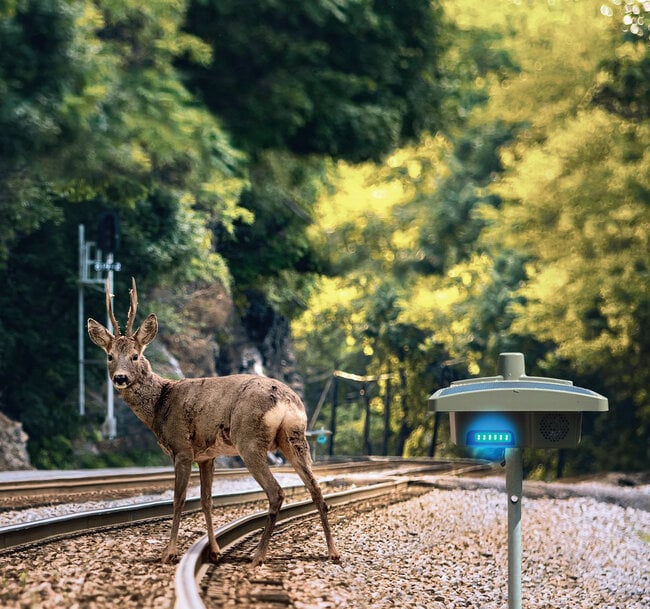
ElanRail is responding by bringing Blue Sentinel to InnoTrans 2026 in Berlin (22–25 September): the only dynamic wildlife collision prevention system built to actively improve rail service reliability.
With more than 300,000 train passages already protected by Blue Sentinel, co-developed and field proven with SNCF Réseau, ElanRail is using the world's foremost railway trade fair to mark its formal entry into the European market.
A growing challenge: European railway networks under pressure
In 2025, SNCF Réseau recorded 1,404 train-wild boar collisions, up 27% from 2024 and 60% over the past three years. For all wildlife species combined, 2,562 animals were struck by trains across the French rail network in 2024.
The operational impact is real and measurable: up to 20 trains delayed or cancelled every day, with 302,343 minutes lost to wildlife collisions across the network in 2024 alone, a figure published by Groupe SNCF that puts the full scale of the problem into sharp relief.
The pattern is not unique to France. Across Europe, growing populations of large mammals (wild boar, red deer, roe deer and elk) are steadily raising collision risk on railway networks. Each incident costs infrastructure managers an average of €100,000 in direct costs, on top of cascading disruption to services and passenger experience.
Passive measures such as fencing and barriers are reaching their limits: expensive to install, demanding to maintain, and a genuine threat to ecological connectivity. Blue Sentinel offers a fundamentally different approach, a dynamic system deployed precisely on collision hotspots, where the risk is highest.
Blue Sentinel: 300,000 train passages protected in France, and now expanding across the rest of Europe
The principle is simple, robust and field-proven. Detection beacons sense an approaching train and trigger, through alert beacons, audio and light signals in the seconds before it passes, giving wildlife time to clear the tracks, without disrupting natural movement patterns or fragmenting ecological corridors.
Blue Sentinel cut large wildlife collisions by 90% over its first 18-month pilot in Pays de la Loire. The system now covers collision hotspots across six French regions and has protected more than 300,000 train passages to date. This track record validates both the system's technical reliability and its ability to perform across varied environments and species.
The beacons are solar-powered, autonomous and installed lineside, no civil works required, no operational disruption, no impact on existing infrastructure. Remotely configurable and drawing on an adaptable sound library, Blue Sentinel can be tailored to the specific conditions of any railway network: local wildlife species, terrain profile and traffic patterns.
"Every European railway network faces the same challenge: cutting wildlife collisions without permanently locking animals out of their natural corridors. Blue Sentinel was built to solve this. At InnoTrans, our goal is to show that a dynamic, field-proven approach developed in France can set a new standard for wildlife collision prevention across Europe," says Michaël Rublon, Head of ElanRail.
InnoTrans 2026: an immersive stand built around a real trackside scenario
Making its debut at InnoTrans 2026, the world's leading international railway technology trade fair, celebrating its 30th anniversary, ElanRail has built a stand designed to put visitors in the middle of an authentic trackside scenario, not just a product display.
At Hall 5.2, Stand 365, visitors can see Blue Sentinel in action under near-real conditions and get a hands-on sense of how it works and what it delivers.
At the stand:
1. A live, full-sequence demonstration of the system in operation
2. Detection and alert beacons on display and fully operational
3. A complete Blue Sentinel activation sequence, from train detection to wildlife deterrence, visible from start to finish
The format gives visitors a first-hand understanding of how Blue Sentinel integrates with railway infrastructure: from the initial detection and signal activation through to the moment wildlife clears the tracks ahead of an incoming service.
www.elanrail.com
