
railway-international.com
24
'26
Written on Modified on
High-Density DC-DC Power Conversion for Railway Architectures
Bel Fuse addresses demanding transportation power requirements with new converters that simplify integration across multiple rail vehicle architectures through standardized voltage support.
www.belfuse.com
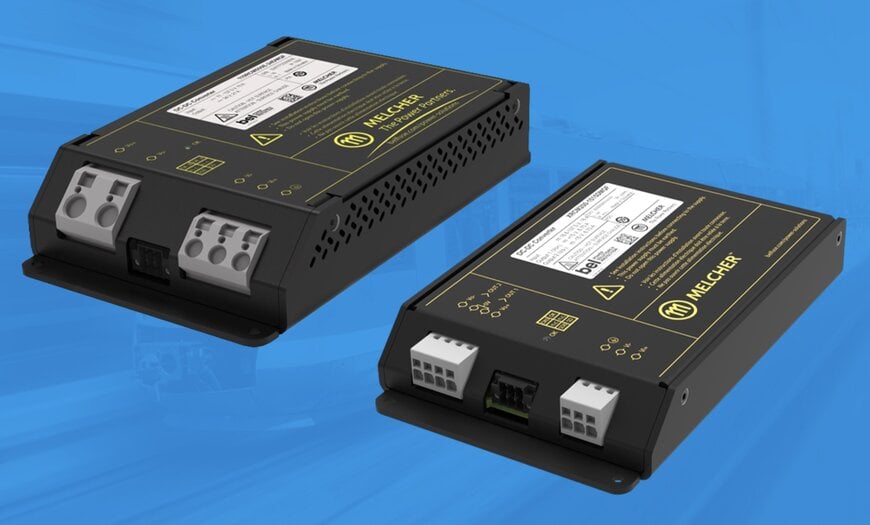
Bel Fuse Inc. has released the XRCM 200 and XRCM 300 series, a second generation of ultra-wide-input-range DC-DC converters engineered for railway and transportation applications. The hardware provides high-density power conversion solutions that accommodate varied electrical architectures and reduce integration effort within modern transit systems.
Broad Voltage Compatibility and System Standardization
The primary technical advantage of the XRCM series is its ultra-wide input voltage range of 16.8 VDC to 137.5 VDC. This parameter allows the units to be compatible with all common railway battery systems globally. By covering this broad spectrum, original equipment manufacturers (OEMs) can standardize on fewer power platforms across multiple vehicle architectures, eliminating the need to specify different converter models for distinct regional transit networks. Silvan Mueller, Director of Business Development for Railway Power Systems Products, noted that the series simplifies engineering implementation by coupling this voltage compatibility with a compact footprint and necessary electrical protection mechanisms.
Technical Specifications and Thermal Performance
The product line is divided into two distinct power profiles to address different implementation requirements. The XRCM 200 is a dual-output converter delivering 200 W at ±15 V, optimized for compact installations requiring lower power consumption. Conversely, the single-output XRCM 300 converter delivers 300 W at 24 V and is engineered with an extended temperature range, allowing continuous operation at ambient temperatures up to 85 °C.
Both converter families are characterized by high power density and low inrush current. They integrate comprehensive electrical safeguards, including protection against overheating, overvoltage, overcurrent, and short-circuit events, which are critical for maintaining continuous operation in fluctuating railway power networks.
Industry Compliance and Exhibition
Compliance with strict transportation standards is mandatory for railway power systems. The XRCM 200 and XRCM 300 series are designed to meet EN 50155 and EN 50121-3-2 European standards for electronic equipment used on rolling stock, as well as North American AREMA standards. The converters were showcased at the Bel Fuse booth (Hall 17, Booth No. 310) alongside other railway power systems during the InnoTrans exhibition, which took place in Berlin from September 22 to 25.
Additional Context
This section details technical specifications and competitive benchmarking not included in the original news release.
The railway DC-DC converter market is defined by strict adherence to EN 50155 standards, requiring robust thermal and electrical shock tolerance. Comparable power conversion units from competing manufacturers typically offer wide input ranges—often specified as 8:1 or 12:1 ratios—to cover standard nominal railway battery voltages of 24V, 36V, 48V, 72V, 96V, and 110V. The 16.8 VDC to 137.5 VDC range of the XRCM series achieves an approximate 8:1 input ratio, placing it in direct structural parity with high-end industrial tier converters. Furthermore, delivering 300 W of output power in a single compact module while sustaining operation at 85 °C ambient temperature aligns with the upper tier of thermal performance requirements, specifically for sealed or unventilated train compartments where forced-air cooling is unavailable.
Edited by Aishwarya Mambet, Induportals Editor, with AI assistance.
www.belfuse.com
