
railway-international.com
25
'26
Written on Modified on
Wabtec & Alpha Trains Plan Coupler Overhauls at InnoTrans 2026
Standardized maintenance frameworks secure mechanical, pneumatic, and electrical interface integrity across regional passenger rail fleets throughout multi-decade operating lifecycles.
www.alphatrains.eu
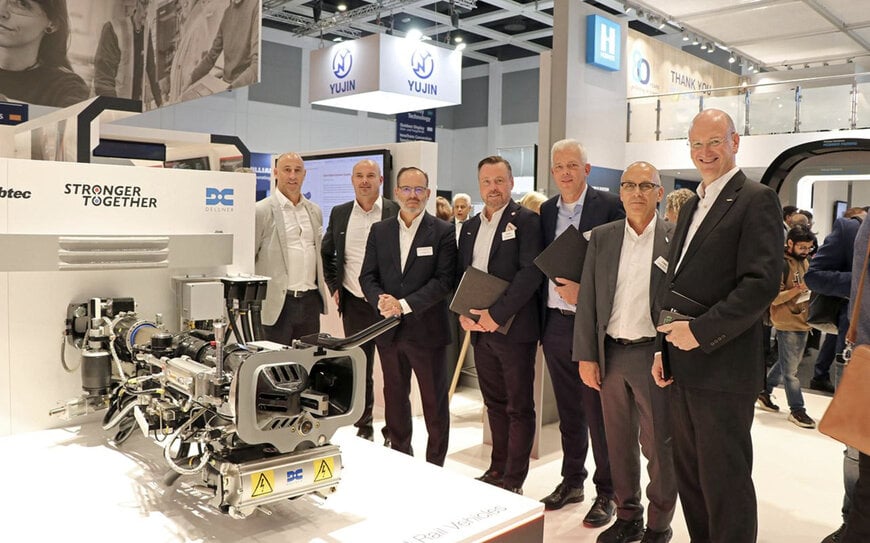
Alpha Trains and Wabtec have entered formal negotiations to establish a long-term framework agreement covering comprehensive overhaul protocols for automatic coupler systems. The technical cooperation focuses on regional passenger rail fleets across Europe, combining asset lifecycle management with structured mechanical and electrical refurbishment workflows.
Framework Architecture and InnoTrans Announcement
Alpha Trains and Wabtec signed the preliminary letter of intent at the InnoTrans rail transport exhibition in Berlin, Germany. The impending contract, scheduled to enter into force on January 1, 2027, establishes a multi-year technical and commercial coordination structure for fleet overhaul campaigns.
The framework is configured to incorporate multiple rolling stock fleets operated under Alpha Trains lease contracts over time. Consolidating coupler maintenance under a single operational standard provides reliable forecasting for workshop capacity, component replacement rates, and technical overhaul schedules across the remaining operational lifespans of passenger trainsets.
Kinematic and Safety Functions of Rail Coupler Assemblies
Automatic couplers serve as safety-critical interfaces that integrate mechanical links, pneumatic connections, and electrical lines between adjacent rolling stock units. In regional passenger services, these assemblies endure constant traction and braking force transmissions alongside high-frequency coupling cycles.
Coupler systems incorporate defined energy absorption elements designed to dissipate kinetic impact energy in accordance with standardized crashworthiness parameters. Wear on gathering heads, pivot anchors, contact pins, and draft gears directly impacts train availability, requiring scheduled mechanical refurbishment to sustain dynamic stability and secure reliable inter-car connections.
Obsolescence Engineering and Fleet Maintenance Programs
A central objective of the partnership is the engineering of replacement solutions for components that face production obsolescence or supply shortages over vehicle service intervals. By introducing systematic upgrades during planned heavy-maintenance cycles, maintenance teams ensure structural compliance with prevailing railway safety standards.
Fernando Pérez, Chief Executive Officer of Alpha Trains, stated that structured collaboration with Wabtec secures coordinated coupler maintenance through combined technical specialization, long-term fleet capacity planning, and proactive obsolescence controls to maintain trainset availability.
Fredric Håkansson, Vice President of Wabtec Couplers Group, indicated that combining component engineering with rolling stock operational data establishes proactive inspection and refurbishment cycles, ensuring safety-critical systems meet technical specifications throughout their operating lifecycles.
Material Preservation and Asset Lifecycle Extension
The structured maintenance approach is engineered to prolong the lifespan of existing draw gear and coupler heads while minimizing redundant unit replacements. Selective refurbishment and precision remanufacturing reduce the raw material demand associated with forging and casting new mechanical housings. Extending the functional duration of in-service rail components preserves capital value and operational readiness across public transport networks without compromising systemic safety.
Additional Context:
This section details technical specifications and competitive benchmarking not included in the original product announcement
Regional passenger rolling stock in Europe predominantly relies on automatic couplers derived from the latch-type coupling mechanism, primarily represented by Dellner designs and Voith Scharfenberg (Type 10) couplers. Both designs fulfill European standard EN 15020 for coupling performance and integrate energy absorption elements compliant with EN 15227 crashworthiness requirements for railway vehicle bodies.
Dellner automatic couplers utilize a modular gathering head design featuring a mechanical hook-and-socket connection paired with automatic air line connections and top- or side-mounted electrical contact boxes. In comparison, Voith Scharfenberg Type 10 couplers operate with a rotating uncoupling disc and hook mechanism acting against a tension spring. Scharfenberg Type 10 systems typically provide horizontal gathering ranges of up to plus or minus 180 millimeters and vertical gathering ranges of plus or minus 140 millimeters, whereas Dellner coupler geometries provide comparable centering and gathering kinematics optimized for high coupling speeds up to 12 kilometers per hour.
Energy absorption in modern rail couplers is delivered in multiple stages: reversible elastomeric or hydrostatic draft gear units absorb cyclic service shocks up to defined operational force limits, while irreversible deformation tubes or shearing bolts absorb catastrophic kinetic loads during collision events. While both Wabtec Dellner and Voith assemblies offer equivalent static load ratings of approximately 1,000 kilonewtons in tension and 1,500 to 2,000 kilonewtons in compression, maintenance methodologies diverge in draft gear reconditioning. Dellner units emphasize modular replacement of pre-assembled internal damping cartridges and modular electric heads, whereas competing systems frequently require specialized tooling for full drawbar tear-down during 8- to 10-year major inspection intervals.
Edited by Natania Lyngdoh, Induportals editor, assisted by AI.
www.alphatrains.com
