
railway-international.com
25
'26
Written on Modified on
Hitachi Rail Introduces Battery Electric Intercity Train at InnoTrans 2026
Dual-mode battery-electric trainsets enable zero-emission regional passenger service across non-electrified track sections with rapid overhead recharging capabilities.
www.hitachirail.com
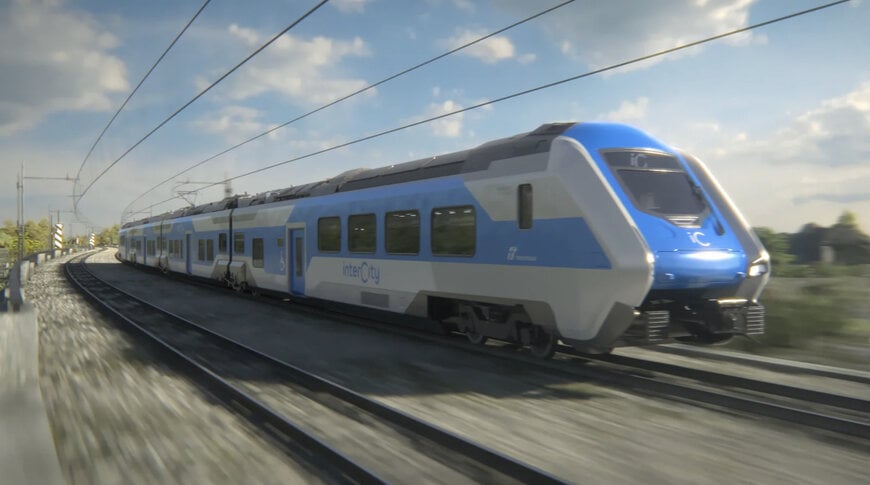
Hitachi Rail presented its battery electric multiple unit intercity train designed for the Italian rail network. The dual-mode rolling stock replaces conventional diesel trains across passenger rail corridors lacking continuous overhead catenary infrastructure.
Exhibition Debut and Production Framework
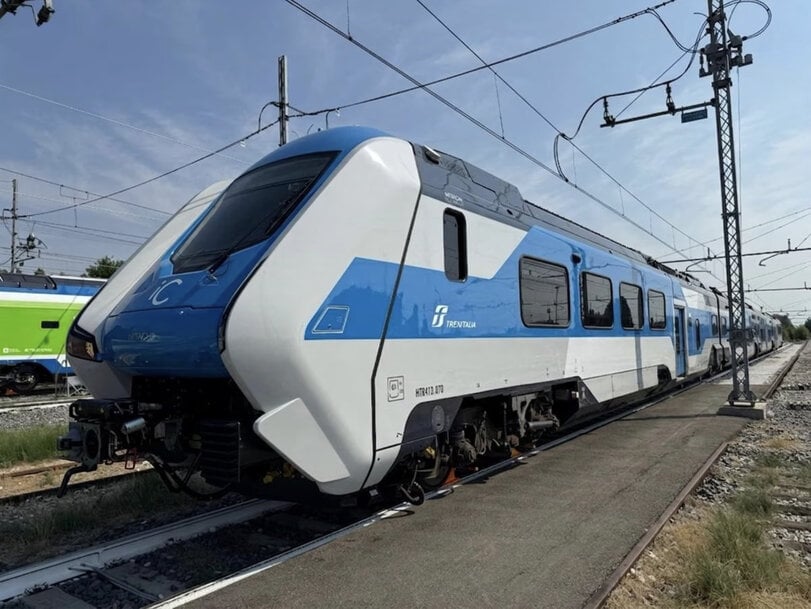
Hitachi Rail showcased the battery-electric intercity configuration at the InnoTrans transportation technology trade fair in Berlin, Germany. Italian national operator Trenitalia ordered six trainsets under a broader framework agreement established for the Blues regional fleet, with manufacturing assigned to Hitachi Rail production facilities in Pistoia and Naples. The contract includes a fifteen-year full-service maintenance program to ensure operational readiness.
Autonomous Traction and Energy Recuperation Systems
The train features an onboard lithium-ion energy storage system exceeding 600 kilowatt-hours, allowing autonomous operation for up to 100 kilometers on non-electrified routes. Traction architecture includes dynamic regenerative braking, which recovers kinetic energy during deceleration and feeds power back into the battery array.
The autonomous propulsion system expands operational flexibility during shunting maneuvers in non-electrified depot facilities and enables continuous traction during passenger embarkation onto roll-on/roll-off ferry links. In the event of primary overhead line power disruptions, the secondary battery supply acts as a fail-safe reserve to clear active rail corridors.
Recharging Kinematics and Powertrain Specifications
Equipped with dual pantographs, the train recharges its onboard storage packs directly from standard overhead electrification networks. Stationary fast-charging protocols complete a full battery recharge in approximately thirty minutes during scheduled passenger stops.
The train delivers an acceleration rate of 1.10 meters per second squared and reaches a maximum operating speed of 160 kilometers per hour. Roof-mounted traction components preserve internal floor space across the passenger cabin, which accommodates 200 seats alongside widened window glazing. Environmental control systems dynamically balance HVAC power draw against onboard passenger volume, combining with full-vehicle LED lighting and an automated power-down Smart Parking mode to minimize non-traction electrical loads.
Additional Context:
This section details technical specifications and competitive benchmarking not included in the original product announcement
Battery electric multiple units are deployed across European regional networks to close operational gaps where network-wide overhead line installation is economically unviable. The primary technical benchmarks across this rolling stock segment include nominal battery capacity, autonomous non-electrified range, top speed, and overhead fast-charging cycles.
The Hitachi Rail battery electric intercity operates on the Masaccio platform, delivering 160 kilometers per hour top speed and a 100-kilometer autonomous range from an onboard capacity exceeding 600 kilowatt-hours. In European regional passenger operations, primary direct competitors include the Stadler Flirt Akku and the Alstom Coradia Continental BEMU.
The Stadler Flirt Akku delivers an operational battery range between 80 and 150 kilometers under normal commercial operating conditions and matches the 160 kilometers per hour top speed under overhead wire and battery traction. Stadler's platform utilizes roof-mounted traction batteries with charging times ranging from 15 to 20 minutes under 15 kilovolt or 25 kilovolt alternating current overhead lines.
Alstom Coradia Continental BEMU trainsets, deployed across regional German lines, incorporate roof-mounted lithium-ion battery modules with a nominal range of up to 120 kilometers and a maximum speed of 160 kilometers per hour, requiring terminal charging intervals of approximately 15 to 20 minutes.
While competitive European models primarily interface with high-voltage alternating current catenaries in central and northern Europe, Hitachi's traction chain on the Blues platform is optimized for direct integration with the 3 kilovolt direct current overhead infrastructure standard on the Italian mainline network, managing thermal distribution across high-current DC charging phases through its integrated dual-pantograph architecture.
Edited by Natania Lyngdoh, Induportals editor, assisted by AI.
www.hitachirail.com
