
railway-international.com
30
'26
Written on Modified on
Semi-Automated GoA2 Operation Launched on Swiss Regional Line
BLT Baselland Transport AG introduces GoA2 operation on the Waldenburg Railway using modern CBTC signalling from Stadler.
stadlerrail.com
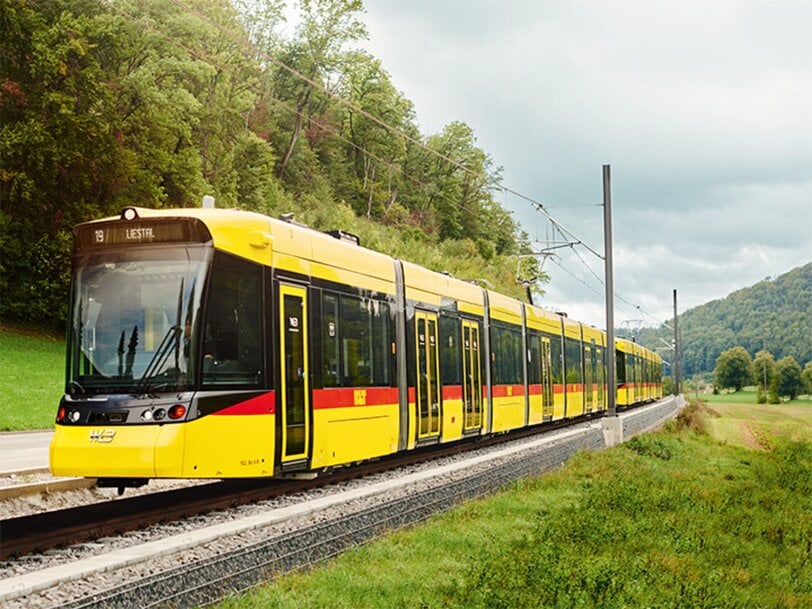
BLT Baselland Transport AG has become the first railway operator in Switzerland to introduce semi-automated train operation (GoA2) on the Waldenburg Railway, following approval by the Swiss Federal Office of Transport. The milestone is enabled by a newly developed digital signalling and train protection system supplied by Stadler.
First GoA2 deployment in Switzerland
The introduction of GoA2 operation on the Liestal–Waldenburg line marks a national first for Swiss rail transport. Under GoA2, trains operate semi-automatically, with automated control of movement while a driver remains on board to supervise operations and intervene if required.
Approval by the Swiss Federal Office of Transport (BAV) confirms that the system meets national safety and operational requirements, setting a precedent for future automation projects on regional railways in Switzerland.
CBTC technology as the core enabler
At the heart of the semi-automated operation is Stadler’s NOVA Pro train protection system. This communications-based train control (CBTC) platform has been completely redeveloped by Stadler at its Wallisellen site.
NOVA Pro enables continuous, bidirectional communication between trains and wayside safety equipment. By replacing conventional lineside signalling with digital data exchange, the system provides the technical foundation for automated train control and future higher grades of automation.
How GoA2 operation works in practice
In GoA2 mode, once passengers have boarded and the driver authorizes departure, train operation is handled automatically by the CBTC system. The system controls speed, ensures compliance with permitted limits, manages level crossings, and brings the train to a precise stop at the next station.
This automation reduces the driver’s workload by removing routine driving tasks, allowing the driver to focus on supervision, situational awareness, and passenger safety. The result is more consistent driving behavior and improved punctuality along the line.
Infrastructure and rolling stock modernization
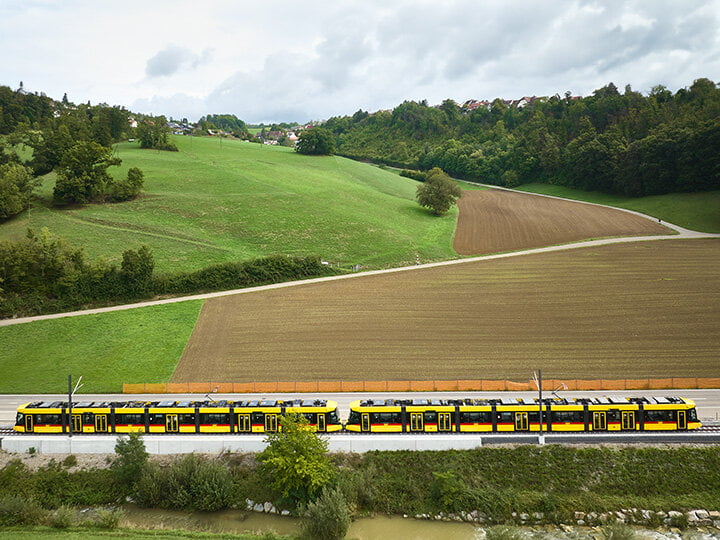
The launch of GoA2 operation is part of a broader modernization program for the Waldenburg Railway. Since the end of 2022, ten new Stadler trainsets manufactured in Valencia have been in service on the line.
In parallel, BLT has completely renewed the 13-kilometre Liestal–Waldenburg infrastructure. The project included new track, modernized stops, and a new generation of signalling and control systems designed to support digital and automated operations.
Path toward higher automation levels
Beyond mainline operation, BLT is preparing the next step in automation within depot operations. From the end of 2026, the newly built depot in Waldenburg is planned to support fully unattended vehicle maneuvering, corresponding to GoA4 automation.
This would enable automated shunting and depot movements without onboard staff, further increasing operational efficiency and consistency while reducing manual handling in non-passenger environments.
Application context
The Waldenburg Railway project demonstrates how regional railways can transition incrementally toward automation by combining new rolling stock, renewed infrastructure, and digital signalling. By starting with GoA2 operation and planning for higher automation levels in controlled environments such as depots, BLT is establishing a phased approach to digital rail operations.
As rail operators seek to improve punctuality, capacity, and operational efficiency, the deployment provides a reference case for introducing CBTC-based automation on secondary and regional lines within existing regulatory frameworks.
www.stadlerrail.com
