
railway-international.com
23
'26
Written on Modified on
Škoda Group Launches First Electric Trains for Bulgarian Railways
New four-car electric multiple units support railway modernisation with ETCS Level 2, 160 km/h operation, and long-term maintenance integration.
www.skoda.cz
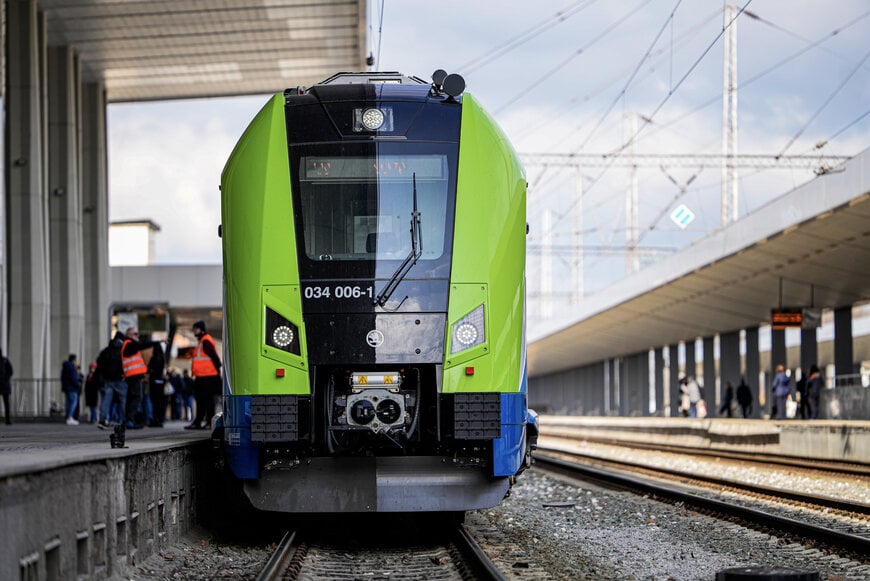
Railway modernisation in Southeast Europe increasingly relies on energy-efficient rolling stock and interoperable signalling systems. Škoda Group has presented its first completed electric multiple unit for Bulgaria and initiated on-track testing, marking a key step toward deployment in regional and suburban passenger services.
The first two trains began testing on Bulgarian infrastructure in the week of 23 March 2026, following prior dynamic and safety validation in the Czech Republic. This phase completes a multi-stage testing process required before entry into regular passenger service.
Electric multiple units designed for regional rail transport
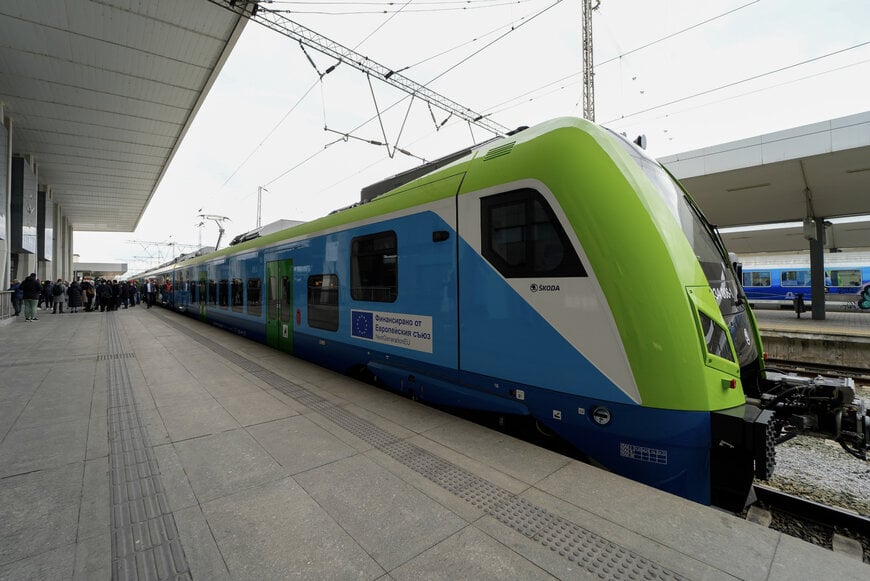
The new four-car electric trains are based on the RegioPanter platform, adapted to meet Bulgarian railway requirements. Each unit provides seating for more than 300 passengers and operates at speeds of up to 160 km/h, powered by a 25 kV AC / 50 Hz overhead system.
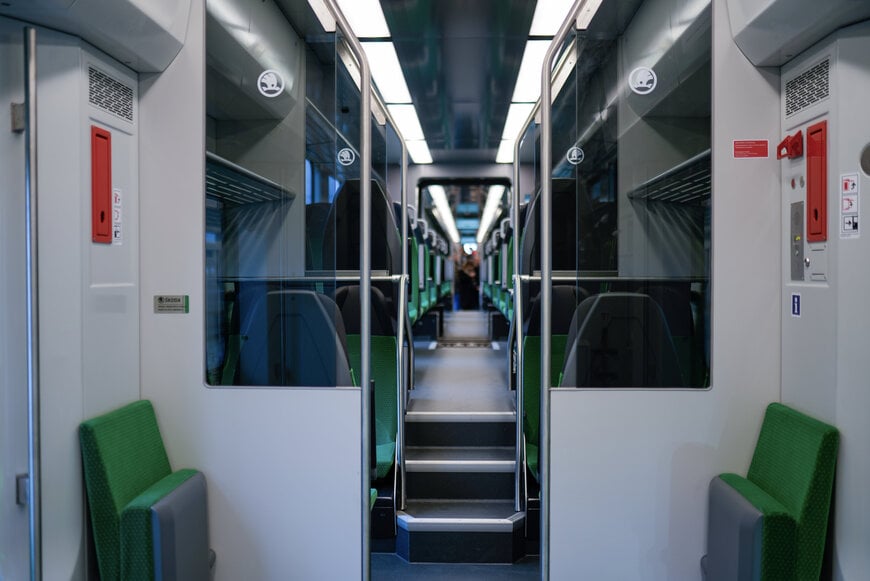
The trains are equipped with ETCS Level 2 signalling, enabling interoperability and compliance with European rail traffic management standards. Additional onboard systems include air conditioning, Wi-Fi connectivity, and interior and exterior CCTV, supporting both passenger comfort and operational safety.
A partially low-floor configuration facilitates step-free access, improving accessibility for passengers with reduced mobility, as well as accommodating prams and bicycles through dedicated multifunctional spaces.
Accelerated production and system integration
The first units were manufactured within 14 months of contract signing, reflecting a compressed production timeline for customised rolling stock. The trains incorporate tailored exterior and interior designs, adapted passenger information systems, and integrated safety and signalling technologies.
Such integration is critical in ensuring compatibility with national rail infrastructure while maintaining compliance with European technical specifications for interoperability.
Long-term maintenance and operational reliability
The contract includes the delivery of 25 electric trains along with a 15-year maintenance agreement, to be carried out locally in Bulgaria. This approach supports predictable lifecycle costs and ensures consistent fleet performance over time.
By combining rolling stock supply with long-term service provision, the project aligns with trends in rail procurement that prioritize total cost of ownership and operational continuity.
Testing phase and deployment timeline
The arrival of the first two units in Bulgaria marks a milestone in the project, as they undergo certification and approval processes in coordination with national railway authorities. These procedures are necessary to validate performance under local operating conditions before passenger service begins.
Production of the remaining units continues in parallel, with deployment planned progressively as certification milestones are achieved.
Applications in regional and suburban mobility
The trains are intended for regional and suburban routes, where reliable, high-capacity electric multiple units are essential for improving service frequency and passenger experience. Their design supports efficient boarding, reduced dwell times, and compatibility with modern rail infrastructure.
Beyond this project, Škoda Group continues to expand its footprint in Bulgaria through additional deliveries of metro trainsets and trolleybuses, contributing to the broader modernisation of public transport systems in the region.
Edited by Industrial Journalist Natania Lyngdoh — Adapted by AI.
www.skodagroup.com
