
railway-international.com
13
'26
Written on Modified on
Rail Maintenance Hub for High-Speed Fleet Operations
Stadler expands Austrian service capacity with new workshop to support commissioning, certification, and lifecycle maintenance of modern rolling stock.
stadlerrail.com
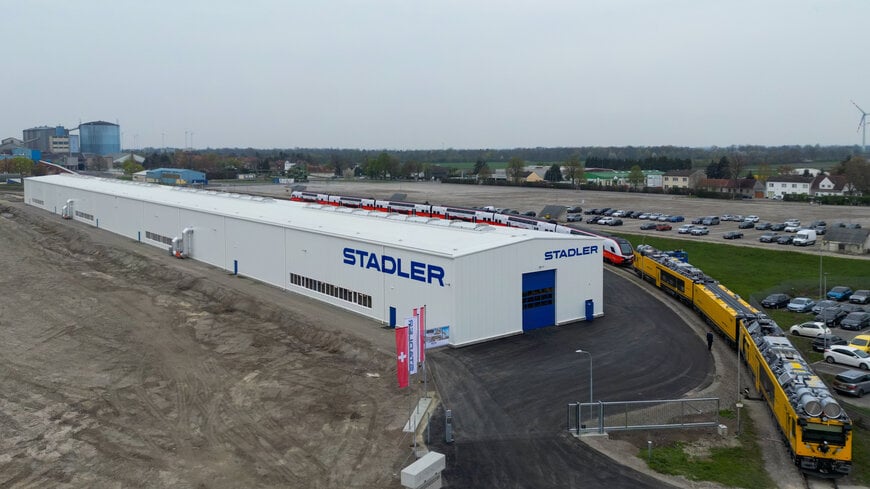
A new rail maintenance and commissioning facility in Lower Austria expands capacity for servicing high-speed trains while improving operational reliability across the regional rail network. The site supports faster vehicle deployment and lifecycle management within a growing European rail system.
Expanded capacity for high-speed rail maintenance
The newly commissioned workshop in Obersiebenbrunn near Vienna increases capacity for commissioning, certification, and servicing of modern rolling stock. Operational since March 2026 for Westbahn high-speed trains, the facility contributes directly to fleet availability by reducing turnaround times for maintenance and testing.
The infrastructure addresses rising demand linked to increased rail traffic density and more technologically advanced train systems. High-speed fleets require precise servicing regimes, including standardized testing and certification procedures, to meet operational and safety requirements across interconnected European networks.
Standardisation and faster commissioning processes
The facility is designed to support multiple operators and enables standardized preparation for test runs across different rolling stock configurations. This approach reduces variability in commissioning workflows and supports faster entry into service.
Such standardisation is a key enabler of a digital supply chain in rail operations, where maintenance data, testing procedures, and certification processes can be aligned across fleets. By centralising these functions, operators can reduce delays associated with fragmented servicing infrastructure.
Infrastructure specifications and network integration
The workshop includes a 225-metre-long hall covering approximately 4,600 m², along with office space and a dedicated storage structure. The scale of the facility allows simultaneous handling of multiple trainsets, which is essential for high-frequency rail corridors.
A direct connection to the rail network, including access to a 200 km/h line planned for ETCS (European Train Control System) integration, ensures compatibility with modern signalling standards and cross-border interoperability requirements.
Industrial collaboration and construction efficiency
The project was delivered in partnership with STRABAG within a seven-month construction period. This timeline reflects coordinated planning between infrastructure development and operational requirements, demonstrating how industrial collaboration can accelerate deployment of rail support facilities.
Role in the evolving rail ecosystem
The facility contributes to Austria’s rail sector by supporting increased fleet capacity, improving maintenance efficiency, and enabling more reliable passenger services. By integrating servicing, certification, and testing in a single location, the site aligns with broader trends toward a connected rail ecosystem, where infrastructure, operations, and data systems are more tightly coupled.
The project also reflects the growing importance of maintenance infrastructure as a technical enabler of rail performance, particularly as high-speed and digitally managed train systems become more prevalent across Europe.
Edited by an industrial journalist Sucithra Mani with AI assistance.
www.stadlerrail.com
