
railway-international.com
28
'26
Written on Modified on
Reliable and efficient air-conditioning for passenger rail
Liebherr-Transportation Systems has been commissioned by Siemens Mobility to supply heating, ventilation and air-conditioning (HVAC) systems for integration into Vectouro trains.
www.liebherr.com
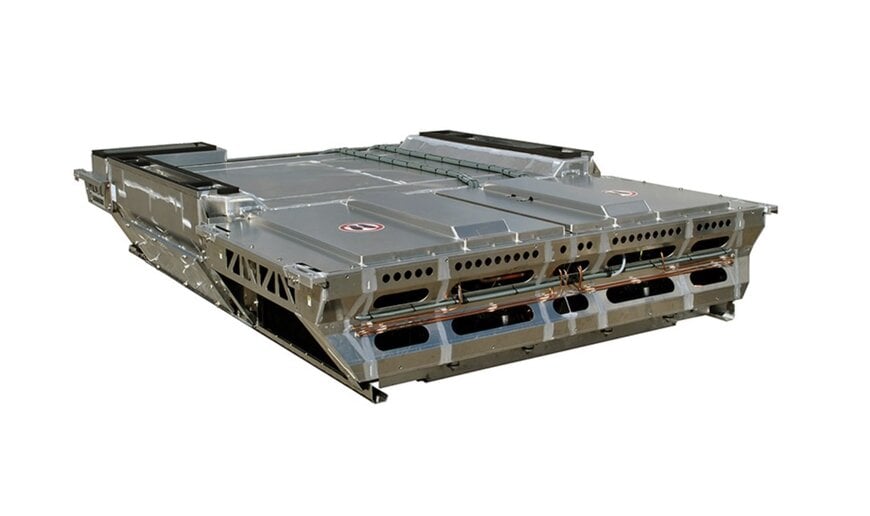
Liebherr-Transportation Systems has been selected by Siemens Mobility to deliver heating, ventilation, and air-conditioning (HVAC) systems for the innovative Vectouro platform. The contract covers the supply of HVAC systems and additional parts such as entrance heaters, controllers and sensors for modular, single-level passenger coaches with first deliveries scheduled for the last quarter of 2026.
Mechanical Integration and Environment Conditioning Subsystems
Implementing consistent ambient environments inside single-level passenger coaches requires highly integrated environmental control units capable of scaling heating and cooling cycles under heavy occupant loads. Under the terms of the industrial supply contract, specialized heating, ventilation, and air-conditioning modules are being built to interface directly with a newly developed rolling stock platform. The hardware delivery encompasses the complete climate control framework, incorporating auxiliary entrance heaters, centralized automated microcontrollers, and multi-point environmental sensors designed to establish a unified indoor air loop.
The physical hardware distribution is scheduled to commence with primary component deliveries during the final quarter of 2026. By integrating auxiliary entrance heating grids adjacent to passenger doors, the system counteracts rapid thermal drafts during high-frequency station stops, preserving the internal core temperature profile. The coordinating sensor matrices continuously track ambient humidity, internal carbon dioxide concentrations, and differential air pressures, streaming this data to the centralized controllers to regulate internal fan speeds and optimize fresh-air intake volume.
Platform Standardization and Accelerated Fleet Deployment
The development of the rolling stock ecosystem relies on a standardized baseline engineered at the manufacturing facilities of the vehicle developer. This vehicle platform concept reduces the typical lead time separating initial order placement from commercial line service by utilizing a pre-validated technical foundation. Because the foundational approval criteria and mechanical baselines are derived from existing certified projects, transit operators can expand their service networks without repeating complete system-level authorization loops.
The climate control systems leverage this mechanical uniformity by utilizing standardized physical mountings and uniform electrical interfaces. This design configuration allows for rapid component swap-outs during scheduled maintenance intervals, reducing workshop downtime and ensuring long-term fleet operational availability. Backed by extensive field data from worldwide rail operations, these high-performance climate systems provide reliable, continuous service while lowering cumulative system energy consumption through dynamic load-matching algorithms.
Additional Context
This section details technical specifications and competitive benchmarking not included in the original news release.
Passenger rail climate installations are strictly evaluated using objective benchmark criteria defined by the DIN EN 13129 standard, which governs internal thermal comfort limits, airflow velocities, and structural vibration tolerances for main-line passenger coaches. Traditional railway air conditioners from competitors like Faiveley Transport or Knorr-Bremse's Merak division have historically relied on synthetic hydrofluorocarbon refrigerants such as R-134a or R-407C, which possess high Global Warming Potential factors and face strict regulatory restrictions across international trade corridors.
The modular heating, ventilation, and air-conditioning architecture developed for this application alters this traditional baseline by adopting an eco-friendly thermodynamic cycle. The system utilizes natural carbon dioxide (R-744) as its primary refrigerant, operating in a transcritical cycle that maintains consistent cooling capacities even when ambient outdoor temperatures exceed 45 degrees Celsius. While conventional baseline units show a performance drop and increased power consumption under high extreme heat loads, the integrated scroll compressors and variable-frequency fan drives on these modules preserve a high Coefficient of Performance of up to 2.8 under full thermal saturation.
Furthermore, the mechanical chassis is constructed from high-tensile, low-weight aluminium alloys, reducing the roof-load weight per railcar by approximately 15 percent relative to legacy stainless steel enclosures. This weight reduction lowers the physical center of gravity of the passenger coach, decreasing lateral track wear and optimizing energy efficiency metrics across high-speed regional rail networks.
Edited by Romila DSilva, Induportals Editor, with AI assistance.
www.liebherr.com
