
railway-international.com
20
'26
Written on Modified on
Axis 3 Modernization: Infrabel Combines Railway Performance with Biodiversity Preservation
The network manager deploys an innovative system to protect local wildlife as part of the renovation of the line connecting Ottignies to the Luxembourg border.
www.infrabel.be
Infrabel, in synergy with its subsidiary TUC RAIL, is actively pursuing the vast modernization program for the 175 kilometers of Axis 3. Aware of the environmental impact inherent in these large-scale works, the teams implemented a rigorous ecological preservation policy as early as 2017. Today, this corporate social responsibility approach reaches a new milestone with the integration of an unprecedented engineering solution designed to protect the wildlife living near the railway infrastructure.
Strategic Safeguarding and Species Reintroduction
Biodiversity protection is an essential component of this infrastructure project. Between April and September, a period identified as the most favorable, environmental experts collect specimens whose habitats are threatened by the advancing construction. During 2025, nearly 376 individuals were safely relocated. Among them are slow worms, lizards, amphibians, and most notably smooth snakes, a small, harmless, and protected species whose population is declining in Wallonia.
The smooth snakes receive specialized care at a rescue center set up at the Grottes de Han-sur-Lesse domain. After an acclimatization period, these reptiles are reintroduced into their natural habitat or transferred to "hibernaculums." These structures, made of stacked stones and generally measuring 1.5 meters high, are specifically designed to foster wildlife and have already been deployed over some ten kilometers by Infrabel as a compensatory measure. Other species are released into sites previously defined by the Walloon Department of Nature and Forests (DNF).
Ecological Engineering: An Innovative "Made in Belgium" System
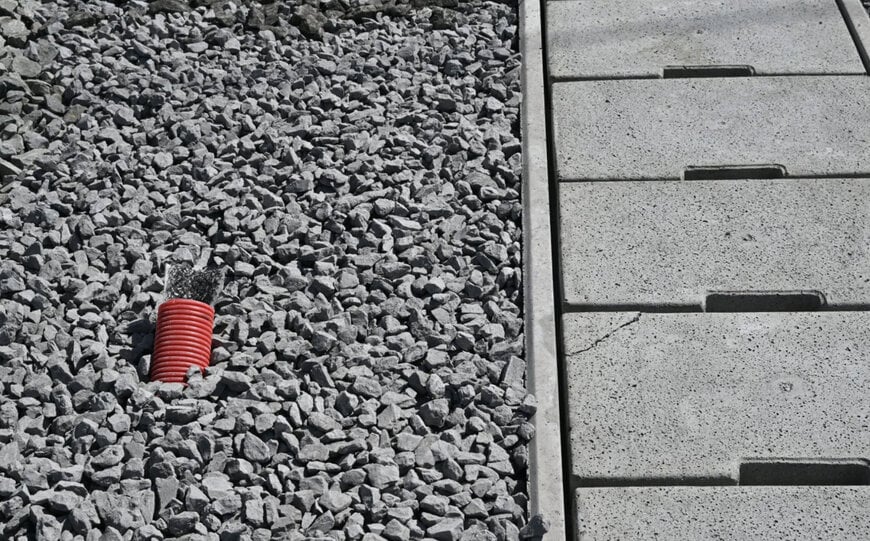
To limit accidental mortality, Infrabel and TUC RAIL, in partnership with the DNF and the engineering firm CSD Ingénieurs, are installing a new type of concrete drainage channel featuring an escape route. Historically, these structures, about sixty centimeters deep and designed for water drainage and cable protection, have acted as fatal traps for many small animals.
The selected system, the result of rigorous testing conducted at a trial site near the Marloie station, features a corrugated pipe lined with a geotextile. Inclined at 30 degrees, it effectively guides the animals toward an exit hole, ensuring an optimal escape rate within the critical 24 hours following their fall.
These strategic escape routes will be positioned at regular intervals of 30 to 50 meters to accommodate the limited movement capabilities of amphibians and reptiles. Representing an investment of approximately 50,000 euros, some 250 "new generation" channels will be installed by 2030, particularly on the sections currently undergoing modernization between Haversin and Marloie, as well as between Jemelle and Grupont.
Development Perspectives and Expected Completion by 2031
This integration of biodiversity is part of a comprehensive action plan, involving systematic ecological inventories of embankments and close collaboration with institutional stakeholders to define sustainable compensatory solutions, such as structured concrete walls and natural shelters.
In parallel, the technical component of Axis 3 is making decisive progress. Work at the Marloie station was recently completed, featuring raised and extended platforms. Currently, the securing of rock faces and the complete renewal of tracks and catenaries are underway along 20 kilometers.
Scheduled for completion in 2031, this major project has already enabled the modernization of the Gembloux, Ciney, Libramont, and Arlon stations, increasing the operating speed to 160 km/h on several finalized segments. Ultimately, this strategic modernization will reduce travel time between the Belgian and Luxembourg capitals by about twenty minutes, seamlessly combining operational performance with environmental excellence.
Edited by Maria Brueva, Induportals editor – adapted by AI.
www.infrabel.com
