
railway-international.com
25
'26
Written on Modified on
Integration of Modular Battery Systems in Passenger Train Fleets
Forsee Power supplies high-voltage lithium iron phosphate battery systems to KONCAR Electric Vehicles for regional rail electrification in Croatia.
www.forseepower.com
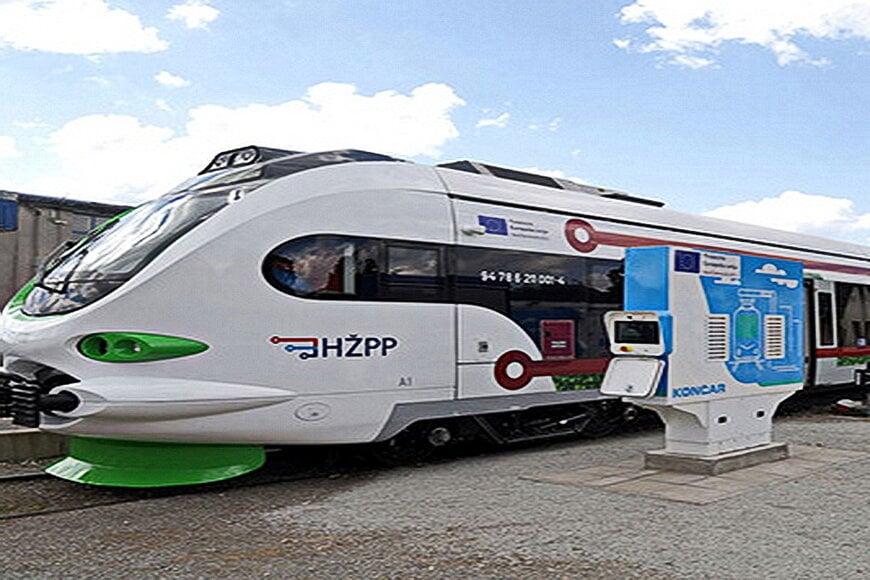
KONCAR – Electric Vehicles integrated ZEN 55 LFP RAIL battery systems from Forsee Power into its new generation of Battery Multiple Units (BMU) and Battery Electric Multiple Units (BEMU). This technical cooperation provides zero-emission propulsion systems for passenger trains operating on both electrified and non-electrified regional rail networks.
Operational Challenges and Rail Electrification
Operating passenger rail services across mixed infrastructure requires rolling stock capable of transitioning between electrified lines and non-electrified tracks. To eliminate dependence on diesel propulsion, regional networks require high-capacity energy storage systems capable of managing traction power, auxiliary loads, and regenerative braking energy recovery. The integration demands scalable battery architectures that interface with existing 25 kV catenary infrastructure, charging stations, and signaling systems without compromising passenger capacity or safety parameters.
Technical Specifications and System Architecture
Forsee Power supplied the modular battery systems, which utilize lithium iron phosphate (LFP) chemistry to deliver up to 7,000 charge cycles. The system supports high-voltage architectures up to 1,500 V, allowing direct integration into the train rolling stock powertrains.
The installation utilizes 55 kWh modules configured to meet multi-megawatt-hour energy storage requirements. These modules operate alongside a dedicated battery management system (BMS) that monitors cell equilibrium, thermal thresholds, and state-of-charge data to maintain process stability during in-motion charging and high-current regenerative braking phases.
The technical solution complies with international railway standards, ensuring safety and reliability configurations:
- EN 50126 SIL2 for reliability, availability, maintainability, and safety.
- IEC 62928, IEC 62619, and IEC 62620 for railway rolling stock onboard lithium-ion traction batteries.
- IEC 61373 for shock and vibration testing of rolling stock equipment.
- EN 45545 for fire protection on railway vehicles.
Implementation and Fleet Deployment
The initial phase of deployment involves equipping an initial order of eight trains manufactured by KONCAR. The application encompasses two-car and three-car train configurations designed to transport 200 to 300 passengers.
The onboard digital infrastructure enables the trains to utilize multi-mode charging mechanisms. The battery systems charge via the 25 kV overhead catenary lines during transit on electrified sections, through regenerative braking energy capture during deceleration, or via stationary charging stations when stationary. This interoperability ensures continuous operational availability across existing European rail tracks and signaling systems.
Edited by Evgeny Churilov, Induportals Media - Adapted by AI.
www.forseepower.com
The initial phase of deployment involves equipping an initial order of eight trains manufactured by KONCAR. The application encompasses two-car and three-car train configurations designed to transport 200 to 300 passengers.
The onboard digital infrastructure enables the trains to utilize multi-mode charging mechanisms. The battery systems charge via the 25 kV overhead catenary lines during transit on electrified sections, through regenerative braking energy capture during deceleration, or via stationary charging stations when stationary. This interoperability ensures continuous operational availability across existing European rail tracks and signaling systems.
Edited by Evgeny Churilov, Induportals Media - Adapted by AI.
www.forseepower.com
