
railway-international.com
29
'26
Written on Modified on
Integration of road and rail freight infrastructure
DB Cargo, terminal operators and industrial companies collaborate to implement combined transport chains, enabling rail network access without private railway sidings.
www.dbcargo.com
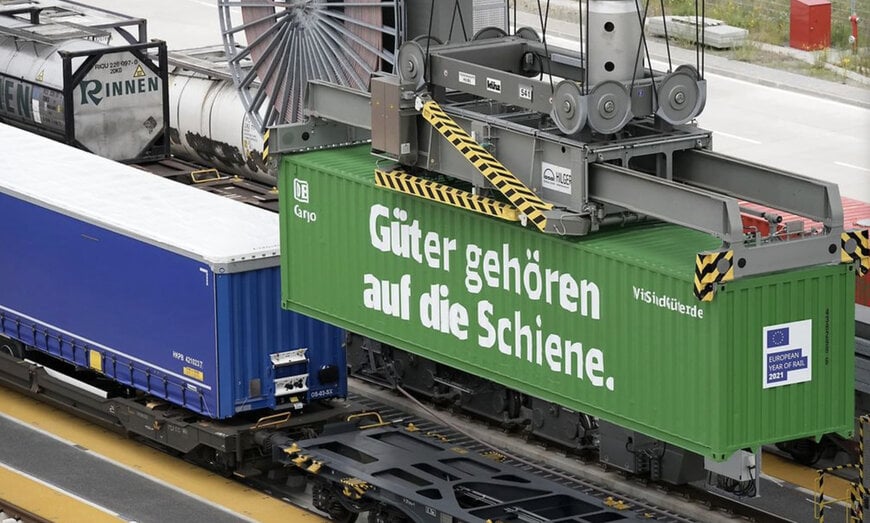
The integration of road and rail freight networks allows companies to utilize combined transport systems. This technical approach optimizes supply chain logistics by linking flexible truck operations with high-capacity rail infrastructure through specialized transhipment points.
Operational Challenges and Collaboration
Industrial facilities often lack direct private railway sidings, limiting their ability to utilize rail freight for heavy or long-distance transport. To address this structural limitation, manufacturing companies collaborate with terminal operators and railports. This cooperation integrates existing road-based supply chains with the rail network, requiring synchronized coordination across pre-haul, transhipment, main leg, and post-haul operations to maintain process stability.
Technical Solution and Responsibilities
The technical architecture relies on standardized loading units, such as containers, swap bodies, or craneable semi-trailers. Terminal operators manage the physical interface, utilizing handling equipment like cranes and reach stackers to transfer these units between trucks and freight wagons. Railport operators provide extended logistical integration, assuming responsibilities for temporary storage, depot services, physical loading and unloading, and customs clearance procedures to consolidate regional goods traffic.
Deployment and Implementation
The physical deployment of these transport chains occurs at dedicated transhipment facilities, such as the Munich Terminal and the Nuremberg Railport. During implementation, incoming trucks deliver loading units which are registered and prepared for transfer onto rail infrastructure. At the destination terminal, the sequence reverses, moving units from the rail network back to road vehicles for final delivery to the consignee. The facilities coordinate time slots and provide the necessary loading units to ensure continuous operational flow.
Applications and Use Cases
This combined transport model is applied directly to long-distance freight operations and predictable high-volume shipments. The functional use cases involve integrating the flexible first and last-mile reach of trucks with the main transit capacity of freight trains. This system stabilizes supply chain operations for facilities located away from direct rail tracks and consolidates regional cargo into efficient transportation hubs.
Results and Expected Impact
The implementation of integrated terminals and railports secures access to the rail network for companies without direct track connections. By shifting the main transit leg to rail infrastructure, a single freight train replaces up to 52 trucks. This multimodal integration reduces mechanical pressure on road networks and lowers carbon dioxide equivalent emissions by approximately 80 percent compared to exclusive truck transport, providing a measurable improvement in logistical efficiency and environmental performance.
Edited by Nicolas Bony, Induportals editor – adapted by AI.
www.dbcargo.com
