
Montréal Metro Orange Line West Extension in Laval
SYSTRA Canada has been selected by the City of Laval to conduct a ridership study for the proposed western extension of Montréal Metro’s Line 2.
www.systra.com
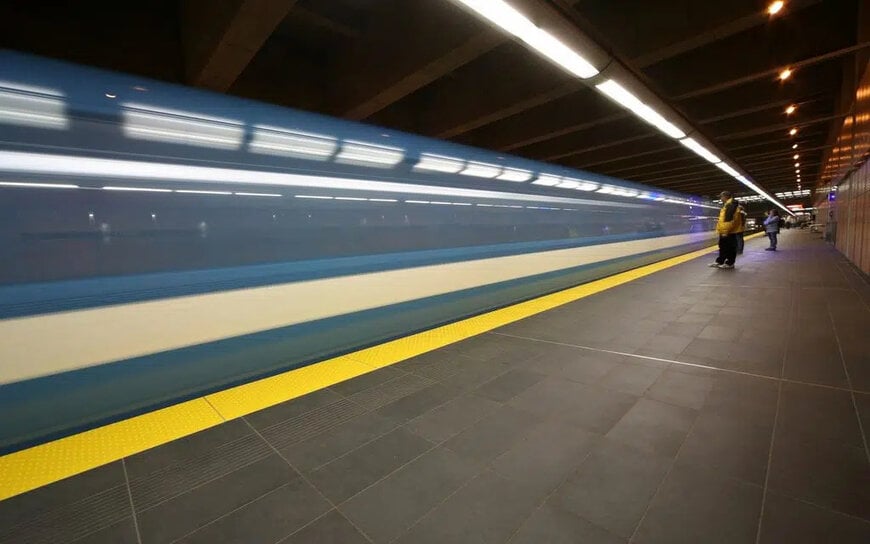
SYSTRA Canada has been selected by the City of Laval to conduct a ridership study for the proposed western extension of Montréal Metro’s Line 2. The study will draw on SYSTRA Canada’s expertise in transportation planning and modelling to assess future mobility needs and support long-term planning for public transit development across Greater Montréal.
A Major Project for Mobility in Laval
The proposed extension of the Orange Line aims to improve public transit access in western Laval while supporting the city’s long-term urban development. The study aligns with the City of Laval’s Mobility Office objective of demonstrating the benefits of integrated land use and transportation planning through the development of a major public transit project, such as a metro extension.
The proposed extension includes five potential stations: Chomedey, Notre-Dame, Saint-Martin, Le Carrefour and Souvenir. These stations could strengthen connections between residential neighbourhoods, employment hubs and key activity centres, while facilitating multimodal travel, particularly between cars, buses, and the metro. The extension could also support the City of Laval’s vision to revitalize its downtown area, which extends on both sides of Highway 15, from Boulevard Le Carrefour to the Montmorency area.
As Laval experiences population growth and urban transformation, assessing future ridership is a critical step in anticipating travel demand and understanding the potential impacts of new public transit infrastructure.
Assessing Future Ridership and Mobility Needs
As part of this assignment, SYSTRA Canada will assess three potential opening scenarios for 2035, 2045 and 2055, examining how ridership could evolve under different project implementation timelines.
The study will consider population projections, changes in economic activity, planned urban and real estate developments in the surrounding areas, travel patterns, and connections with existing and future public transit networks.
Particular attention will be given to connections with bus services and key feeder corridors, including the reserved lanes along Highway 15 and the Saint-Martin, Concorde–Notre-Dame and Dagenais–Curé-Labelle corridors.
These analyses will provide a clearer understanding of how each scenario could affect transit ridership, traffic conditions and accessibility across the city, while providing valuable insights to support decision-making during the next stages of the project.
QUETZAL-CMM: A Transportation Modelling Solution Tailored to Greater Montréal
To carry out this study, SYSTRA Canada plans to use QUETZAL-CMM, a travel demand forecasting model developed by its teams since 2019 and already used on several projects across the Greater Montréal area.
Built on Quetzal, an open-source Python library developed by SYSTRA, the model enables transportation analyses tailored to the specific characteristics of each region and the requirements of individual projects.
Its flexibility makes it easier to integrate new data, adjust development assumptions and compare different mobility scenarios. This approach also promotes transparency in the modelling process and ensures that the underlying assumptions can be traced and reviewed. Once developed, the model will also be available for the City of Laval to use independently, fostering close collaboration with SYSTRA Canada and enabling municipal teams to take full ownership of the tool.
For the Orange Line extension ridership forecasting study, SYSTRA Canada plans to update QUETZAL-CMM using data from the 2023 Perspective mobilité travel survey conducted by the Autorité régionale de transport métropolitain (ARTM), along with travel demand growth assumptions and information on existing and planned transportation networks.
The model will support the analysis of travel patterns throughout the day and during peak periods, allowing the team to compare extension scenarios and assess their potential impacts on travel flows towards downtown Montréal, peak passenger loads and capacity requirements along the metro line, traffic conditions and accessibility.
Supporting Long-Term Sustainable Mobility Planning
Beyond ridership forecasting, this study will contribute to a deeper understanding of how public transit infrastructure, travel patterns, and urban development interact.
The findings will help identify and document the key considerations associated with the proposed Orange Line extension and inform long-term mobility planning, without anticipating any decisions regarding whether the project will move forward.
This new assignment reflects SYSTRA Canada’s ongoing commitment to supporting communities in planning efficient, accessible transportation networks designed to meet future mobility needs.
By combining its transportation planning expertise with modelling solutions developed by its own teams, SYSTRA Canada continues to contribute to more sustainable mobility and better-integrated urban development.
www.systra.com
