
railway-international.com
23
'26
Written on Modified on
Rail Cargo Group Expands Control with Direct Antwerp Transfers and Added Services
Rail Cargo Group and Port of Antwerp logistics partners align operations to run TransFER Duisburg–Antwerp and Linz–Antwerp services under their own traction, enhancing cross-border smart infrastructure connectivity.
www.railcargo.com
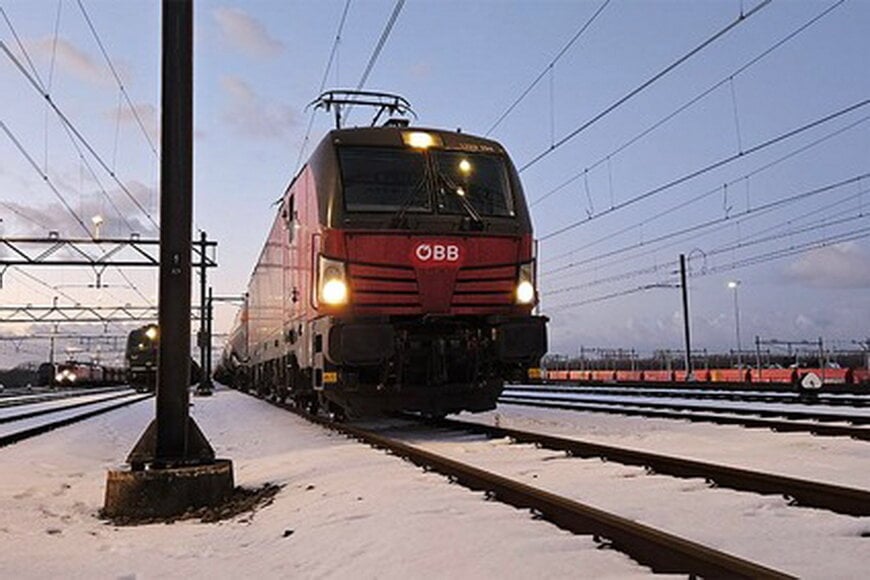
Rail Cargo Group (RCG), the freight arm of Austrian Federal Railways (ÖBB), has transitioned to operating key freight services to the Port of Antwerp under its own traction. By applying its own locomotives and personnel across the full Germany–Belgium and Austria–Belgium corridors, RCG aims to improve service reliability and quality while responding to growing demand from industrial customers. This shift also coincides with a capacity increase on one of its principal weekly services.
Full Own-Traction Operations on TransFER Antwerp Routes
In early 2026, RCG began operating its TransFER Duisburg–Antwerp and TransFER Linz–Antwerp connections entirely under its own traction. This means that throughout these international corridors, RCG uses its own locomotives and trained personnel rather than relying on traction partners for portions of the route. Achieving this capability followed regulatory progress in 2025, when RCG obtained the necessary rail safety certification for Belgium from the European Union Agency for Railways, enabling independent operations on Belgian infrastructure.
Operating with own traction gives customers consistent service standards and direct control over key performance factors such as punctuality and locomotive availability across borders. Shunting and last-mile services within the Port of Antwerp remain the responsibility of established local partners, maintaining efficiency where specialised expertise is advantageous.
Response to Market Demand: Increased Weekly Frequency
RCG has adjusted capacity on the TransFER Duisburg–Antwerp connection in response to rising freight volumes, particularly from the chemical and paper sectors. The number of round trips on this route has increased from two to three per week. Originally introduced in 2024 to serve conventional wagonload traffic, this corridor provides direct access from the Rhine-Ruhr industrial region to major Belgian ports, including Antwerp and Ghent.
With a transit time of approximately 7.5 hours, the service accommodates a range of freight types, including standard wagonloads and containers between 20 and 45 feet. It also supports the transport of RID-classified dangerous goods, broadening its utility for time-sensitive and regulated shipments.
Differentiation and Strategic Positioning
RCG’s shift to full own-traction operations on these corridors differentiates its offering from freight operators that depend on multiple traction providers across national borders. By consolidating traction under one operator, RCG can optimise cross-border coordination, reduce complexity for customers, and deliver a uniform service experience along key European trade lanes.
This capability forms part of a broader strategic effort by RCG to expand its network and operational autonomy. RCG’s international footprint now spans operations with own traction in 14 countries, reflecting long-term regulatory and commercial progress in integrating European rail freight services under single safety certifications.
www.railcargo.com
