
railway-international.com
14
'26
Written on Modified on
Stadler and BLT Advance TINA Tram Vibration Reduction
Rubber-sprung wheel testing in Basel targets lower vibration levels in urban tram operations.
stadlerrail.com
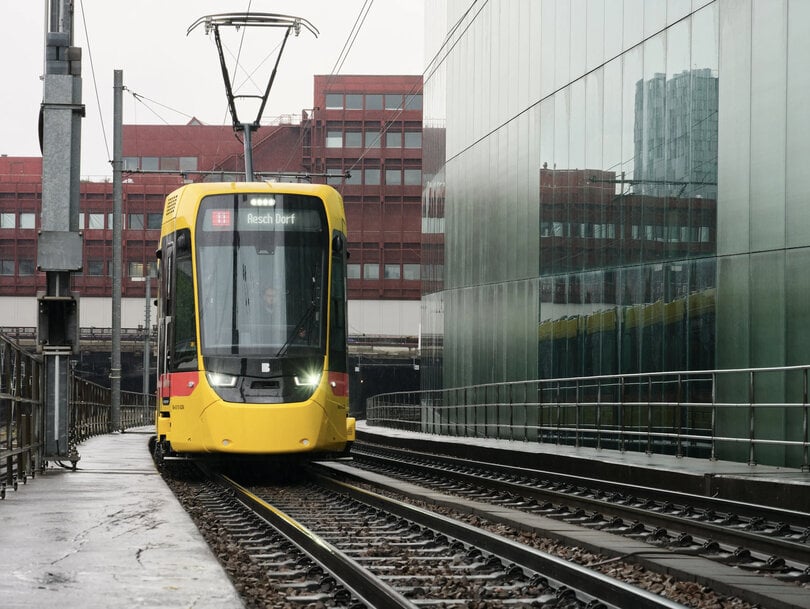
Stadler Rail AG and BLT Baselland Transport AG are implementing additional technical measures to reduce vibration emissions from the TINA tram fleet operating in the Basel region. Following earlier modifications that significantly lowered operational noise levels, the companies will begin testing new rubber-sprung wheel systems in July 2026 to further reduce vibrations generated during tram operation.
The TINA tram platform uses a fully integrated low-floor drive system designed to improve passenger accessibility and interior space efficiency. The vehicle architecture supports step-free boarding and barrier-free access but also requires precise interaction between vehicle systems, rail infrastructure, and operating conditions, particularly in older urban tram networks with tight curves, switches, and varying track foundations.
Noise reduction measures implemented across fleet
Since the introduction of the TINA trams, Stadler and BLT have conducted multiple technical modifications aimed at reducing operational emissions. According to the companies, upgrades included additional damping components, wheel profile optimization, adjustments to magnetic rail brakes, and modifications to exterior paneling elements.
Measurements showed that primary noise emissions were reduced by 3.7 decibels, corresponding to approximately a 50 percent reduction in perceived noise levels. The companies stated that the TINA fleet’s operational noise levels are now comparable to the older Tango tram fleet previously operating within the network.
The retrofit program was completed across the entire BLT TINA fleet by the end of 2025.
Rubber-sprung wheels to reduce vibration emissions
While noise emissions have already been significantly reduced, BLT and Stadler stated that further work is focused on minimizing vibration transmission into surrounding urban infrastructure.
One TINA tram will be equipped with newly developed rubber-sprung wheels designed to improve damping characteristics between the wheel and rail interface. Wheel-rail interaction is one of the primary sources of vibration in urban rail systems, especially within dense city environments where underground infrastructure, building foundations, and track geometry can amplify transmitted vibrations.
The companies stated that repeated measurements will be carried out across urban operating sections to evaluate the effectiveness of the modified wheel systems. Test operations are scheduled to begin in early July 2026.
Phillipp Glogg, Chief Technical Officer of BLT, stated that noise reduction targets had already been achieved and that the next phase of collaboration would focus specifically on vibration reduction measures using modified wheel technology.
Ansgar Brockmeyer, Head of Sales and Marketing at Stadler, stated that the companies had jointly analyzed the causes of noise and vibration emissions and developed operationally validated technical countermeasures.
Future fleet integration planned
According to Stadler, results from the ongoing tests will be incorporated directly into future TINA tram production. If the rubber-sprung wheel systems demonstrate the expected reduction effects, future vehicles will be delivered with the optimized wheel assemblies installed during manufacturing.
Existing vehicles within the fleet will also be progressively upgraded. Stadler stated that the manufacturer will assume the costs associated with the modifications.
TINA tram deployment across Europe
The TINA tram platform is currently operating in six European cities: Basel, Darmstadt, Rostock, Halle, Gera, and The Hague. In April 2026, the German cities of Gera and Zwickau selected the Stadler TINA platform in a joint procurement process and ordered 14 additional vehicles.
Modern low-floor tram systems are increasingly evaluated based on accessibility, energy efficiency, passenger comfort, operational noise, and vibration performance, particularly in densely populated urban transport corridors where environmental impact and resident acceptance are critical operational considerations.
Edited by Natania Lyngdoh, Induportals editor, with AI assistance.
www.stadlerrail.com
