
railway-international.com
01
'26
Written on Modified on
Light Rail Fleet Integration For Nordic Public Transport Infrastructure
Škoda Group and Region Uppsala are cooperating to deploy a customized light rail fleet to establish a high-capacity urban transit network in Sweden.
www.skoda.cz
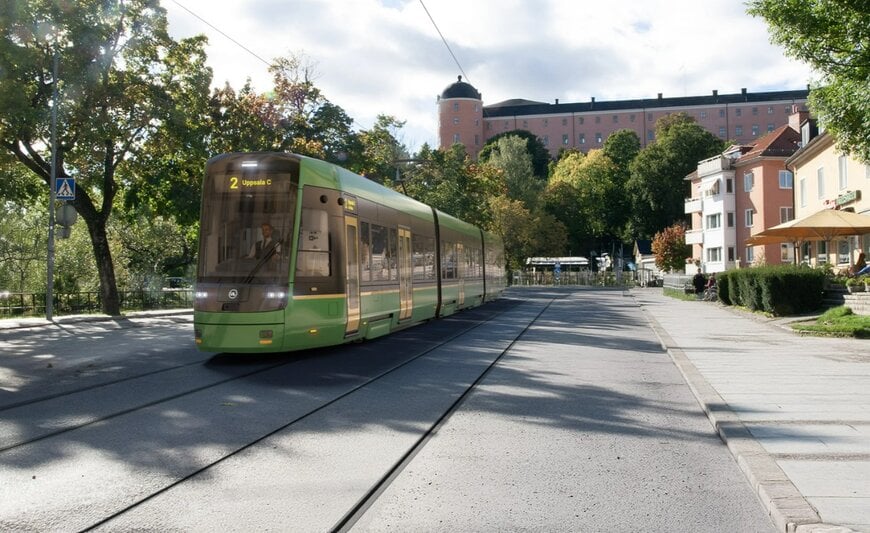
Škoda Group and Region Uppsala are collaborating to implement a complete light rail transit system, integrating specialized rolling stock into a newly constructed urban infrastructure. This cooperation deploys bi-directional, high-capacity trams to establish a sustainable public transport network capable of operating in demanding Nordic climatic conditions.
Addressing Urban Infrastructure Challenges
Region Uppsala is constructing a 17-kilometer double-track tramway to connect critical urban zones, including hospital districts, university campuses, and Uppsala Central Station. Establishing a transit network from the ground up requires aligning civil engineering with specialized rolling stock engineering. This cooperation pairs Uppsala's regional infrastructure development with Škoda Group's manufacturing and lifecycle management expertise to mitigate the technical risks of launching an entirely new urban rail system.
Technical Architecture and System Responsibilities
The technical platform is based on an existing tram architecture previously adapted for Nordic environments, which reduces integration variables. Škoda Group is responsible for manufacturing an initial fleet of 20 fully low-floor, 38-meter bi-directional trams. Each vehicle is engineered to accommodate 186 passengers, operating at a controlled density of 2.5 passengers per square meter.
To ensure systemic safety, the manufacturer is equipping the fleet with proprietary digital safety technologies. This includes an advanced anti-collision system utilizing sensor arrays to detect obstacles, and an intelligent speed limiter that automatically adjusts kinetic output in curves and designated track sections. Region Uppsala is responsible for integrating these operational vehicles into the physical track infrastructure and aligning them with the regional transit grid.
Implementation and Lifecycle Management
The deployment phase integrates the new rolling stock across 22 designated stops within the Uppsala municipality. Beyond the initial vehicle delivery, the partnership is structured around a 12-year maintenance and overhaul framework managed by Škoda Group, which includes an option for a one-year extension. This operational support structure targets critical high-value components to ensure fleet availability and process stability, allowing regional authorities to maintain predictable transit schedules and optimize lifecycle management.
Operational Impact on Urban Mobility
Targeting the municipal public transportation sector, the deployment of this light rail network provides a dedicated transit mechanism to accommodate high passenger volumes. By utilizing 100% low-floor configurations with multi-door access points, the system facilitates efficient passenger flow and minimizes dwell times at stations. Supported by a contract valued at up to EUR 270 million—inclusive of options for an additional 18 vehicles—this engineering and infrastructure partnership establishes a standardized, high-capacity mobility framework designed for long-term operational reliability in extreme weather environments.
Edited by Aishwarya Mambet, Induportals Editor, with AI assistance.
www.skodagroup.com
