
railway-international.com
16
'26
Written on Modified on
Alstom’s 50-Metre Urbanliner Enters Passenger Service in Berlin
New extra-long tram increases passenger capacity and accessibility on Berlin’s busiest tram route.
www.alstom.com
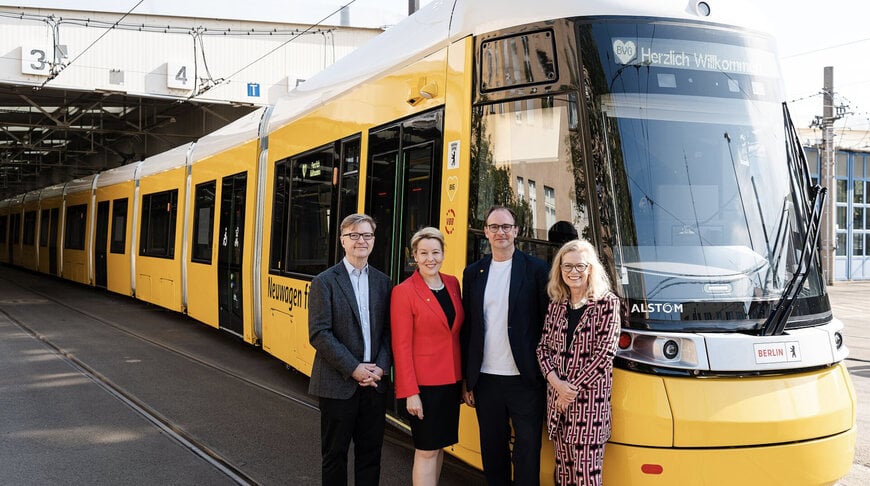
Berliner Verkehrsbetriebe (BVG) and Alstom have initiated the commercial deployment of the 50-meter Urbanliner tram on Berlin’s high-traffic M4 route. This deployment introduces a high-capacity urban mobility solution that addresses passenger volume constraints using extended-length vehicles equipped with advanced driver assistance systems and specific accessibility modifications.
Infrastructure Adjustments and Phased Deployment
On July 15, 2026, the initial 50-meter unit officially began regular passenger service on the M4 line following final field trials and technical approvals. Prior to this deployment, the approval process necessitated structural modifications in the Alexanderplatz area. Engineers installed two additional structural supports within the underground tunnel section to accommodate the higher calculated load scenario introduced by the longer and heavier vehicle. The roll-out schedule indicates that the operational fleet will reach approximately 15 units before the end of the year, with numbers expected to double by 2028. Delivery of the remaining units from the 65-vehicle order is scheduled for completion by 2030, gradually replacing the aging GT6 trams that previously operated as coupled double trains on this transit corridor.
Accessibility Standards and Passenger Ergonomics
The extended chassis design increases the capacity to over 300 passengers per vehicle while reducing structural vibrations to improve ride stability. Interior spatial planning incorporates specific accessibility standards to accommodate diverse passenger requirements. The layout features designated multi-purpose compartments for wheelchairs and walking frames. Seating ergonomics include comfort seats positioned at a height of 51 centimeters for individuals with reduced mobility, alongside extra-low seats at 40 centimeters for children and passengers of short stature. To assist blind and visually impaired individuals, the door handrails incorporate a tactile golf ball texture. Additionally, an integrated gap filler mechanism facilitates barrier-free boarding at stations configured for left-hand boarding. The cabin environment utilizes an automated lighting system that adjusts color temperature between cool and warm white depending on ambient light and seasonal cycles.
Digital Operational Systems and Safety Mechanisms
The Urbanliner architecture eliminates traditional exterior mirrors in favor of an integrated digital camera system. This sensory array provides drivers with a comprehensive rear view under varied operational conditions, effectively eliminating physical blind spots. The camera feed is paired with a forward-facing driver assistance system designed to detect and warn operators of potential obstacles in the tram's path. Responding to shifts in digital payment adoption, the fleet operates entirely without onboard mobile ticket machines. To compensate for this hardware removal, BVG has expanded the physical ticketing network along the M4 route by approximately 70 percent to support passengers utilizing non-digital transit passes.
Additional Context:
This section details technical specifications and competitive benchmarking not included in the original product announcement
The deployment of 50-meter tram units places the BVG network among a select group of European transit systems operating extra-long light rail vehicles. Standard urban trams typically measure between 30 and 40 meters in length. Vehicles exceeding 45 meters, such as the CAF Urbos 3 platform or the Siemens Avenio models, are engineered specifically for urban corridors with high passenger density that require greater throughput without transitioning to heavy rail infrastructure. At 50 meters, the Urbanliner competes directly in this high-capacity segment, matching the 300-plus passenger capacity of these comparable platforms. Furthermore, the integration of digital mirror replacement systems and obstacle detection aligns the Urbanliner with recent light rail safety standards mandated across modern European transit networks, demonstrating a transition from passive safety structures to active, sensor-based accident prevention mechanisms.
Edited by Natania Lyngdoh, Induportals editor, assisted by AI.
www.alstom.com
