
railway-international.com
16
'26
Written on Modified on
Siemens Mobility to Digitalize São Paulo Metro Line 4-Yellow Extension
Advanced CBTC signaling and GoA4 automation will support the expansion of Latin America’s first fully driverless metro line, improving capacity, connectivity and sustainability.
www.siemens.com
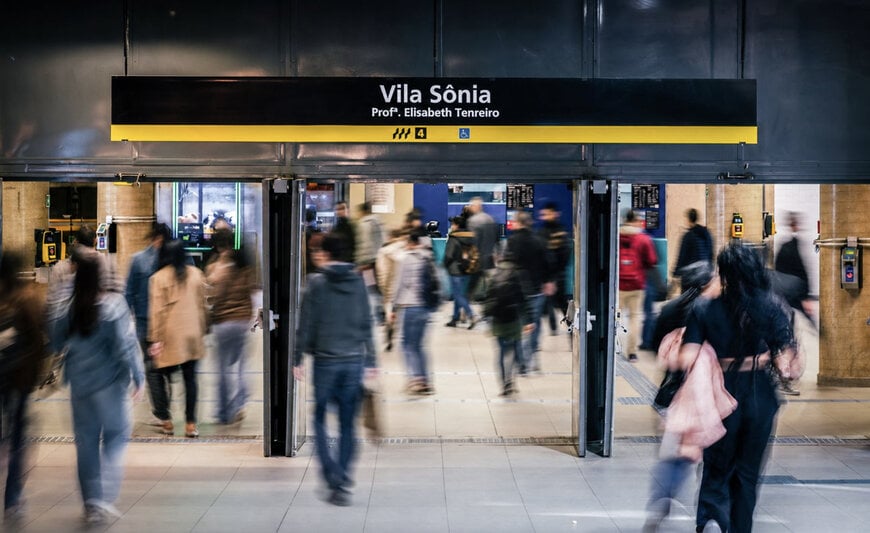
Siemens Mobility is collaborating with Motiva to deploy its Trainguard MT communication-based train control system for the extension of São Paulo’s Line 4-Yellow metro system. This project integrates automated rail signaling technology into the public transit sector to support fully driverless operations and expand urban transit infrastructure.
Integration Of Communication-Based Train Control Systems
The signaling implementation utilizes Communications-Based Train Control (CBTC) technology to achieve Grade of Automation 4 (GoA4), which permits fully unattended train operation. The project encompasses the installation of electronic interlocking, operational supervision, and advanced telecommunication systems. The interlocking framework originates in Germany, the CBTC components in France, and telecommunications in Italy, with final system integration executed in Brazil. Six additional trains will be equipped with this CBTC technology to operate seamlessly within the existing network.
Metro Network Expansion And Operational Capacity
The infrastructure extension adds 3.3 kilometers of double-track tunnels to the existing 12.8-kilometer route, bringing the total length of Line 4-Yellow to 16.1 kilometers. The expansion connects the current terminus at Estacao Vila Sonia-Professora Elisabeth Tenreiro to a new terminus at Taboao da Serra, adding a second new station, Estacao Chacara do Jockey. This development marks the first time a Sao Paulo metro station will be located outside the immediate city limits. The integration of automated rail signaling technology enables train headways of 90 seconds and maintains system availability near 100 percent.
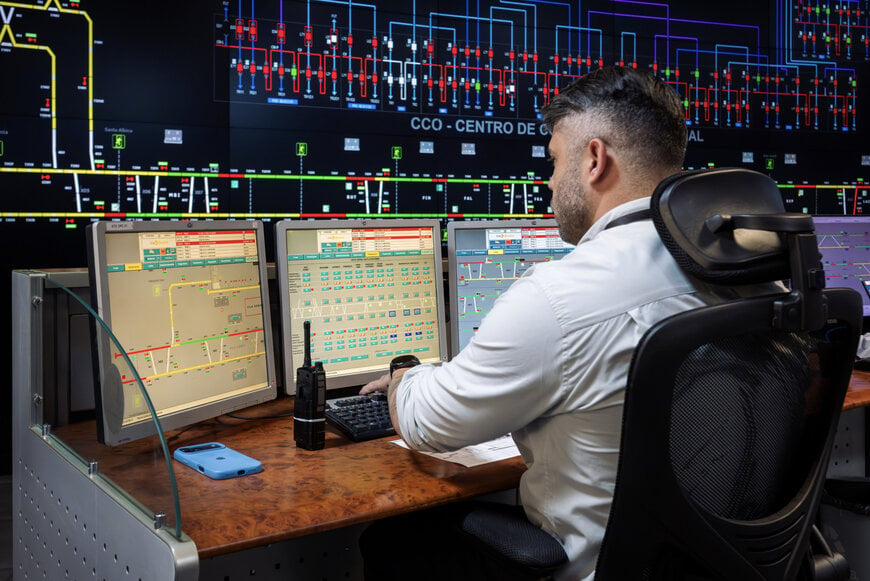
Urban Mobility And Transit Efficiency
The Line 4-Yellow expansion increases the system's transport capacity to accommodate an additional 110,000 passengers daily, building on its current operational volume of 740,000 daily passengers. The route provides an estimated journey time of 26 minutes between the Estacao da Luz and Taboao da Serra terminal stations. The automated transit infrastructure connects residential and commercial areas for approximately 280,000 residents in the Taboao da Serra region, contributing to the structural efficiency of transit networks in a metropolitan area containing over 12 million inhabitants.
Additional Context:
This section details technical specifications and competitive benchmarking not included in the original product announcement
Within the automated urban transit sector, Siemens Mobility's Trainguard MT competes with other high-grade CBTC systems such as Alstom's Urbalis and Hitachi Rail's SelTrac. Benchmark criteria for Grade of Automation 4 (GoA4) systems prioritize minimum headway capability, stopping accuracy, and system redundancy. While traditional fixed-block signaling relies on physical track circuits to maintain safe train separation, moving-block CBTC systems utilize continuous bidirectional radio communication to calculate exact train positions and speeds in real time. This technical mechanism permits headways under 100 seconds and optimizes track capacity without requiring the extensive mechanical maintenance associated with traditional signaling infrastructure.
Edited by Natania Lyngdoh, Induportals editor, assisted by AI.
www.siemens.com
