
railway-international.com
17
'26
Written on Modified on
Digital railway platform for connected rolling stock
Siemens Mobility integrates software architectures and standardized data into the new locomotive infrastructure to optimize the operational capacity of the system.
www.siemens.com
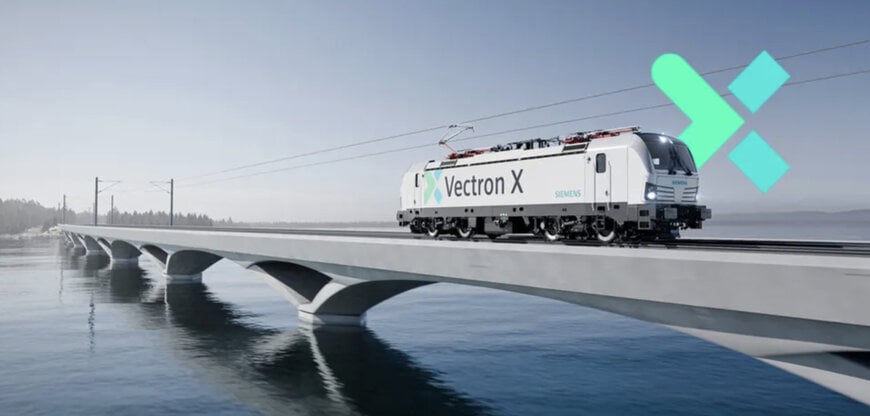
The integration of digital infrastructures in the railway sector enables the development of software-defined platforms for rolling stock. This approach utilizes open and standardized data architectures to facilitate connectivity between locomotives and control systems for industrial operational management.
Technical integration and system development
Siemens Mobility presents the Vectron X locomotive as an operational platform structured through software and connectivity. The system addresses the industrial requirement to increase network capacity and the availability of rolling stock using existing infrastructure. The architecture integrates traction technology with digital services through a central interface that processes operational data, route telemetry, and fleet management applications. The technical solution operates via open application programming interfaces and data standards that connect the driver cab with the Signaling X, Mobility Software Suite X, and Railigent X modules within a cloud-based environment.
Deployment and operational validation
The technological architectures are presented at the InnoTrans trade fair in Berlin, Germany, 2026, where the physical and logical integration of rolling stock with diagnostic systems is demonstrated. The technical implementation is designed to allow remote software updates throughout the lifecycle of the vehicle, adapting its operational parameters to network requirements. Monitoring systems such as Vehicle Equipment Measurement Systems process data from sensors distributed across trains and tracks. Simultaneously, the DS3 safety platform and smart object controllers extend this digital architecture to the field level to manage traffic scalably.
Industrial applications and predictive maintenance
The use of artificial intelligence models and data analysis in railway management focuses directly on predictive maintenance and the stability of the electromechanical process. Diagnostic algorithms process continuous telemetric variables to remotely identify technical anomalies before they interfere with service. This allows for the scheduling of preventive interventions and the optimization of physical maintenance intervals. Systematic analysis generates precise metrics that assist in the logistical management of spare parts and ensure a higher availability rate for assets. "Our portfolio demonstrates how open APIs, standardized data, and connected platforms are converting digital innovation into measurable value at scale. With Vectron X, we bring this software-defined approach to rolling stock," states Michael Peter, CEO of Siemens Mobility.
Quantifiable impact on infrastructure
The deployment of algorithmic planning tools, such as the TPS software suite, which includes the rail yard management module operated under a software-as-a-service model, achieves an increase in railway infrastructure utilization by up to 20 percent. The integration of real-time inventory data, operational capacities, and fare records stabilizes network occupancy. Additionally, the use of digital twin-based simulations facilitates operational parameterization from the initial engineering phase through to track execution, establishing a measurable baseline for evaluating the energy efficiency of alternative traction systems, such as the battery-powered Mireo Plus B train and automated metro networks.
Edited by Maria Brueva, Induportals editor – adapted by AI.
www.siemens.com
