
railway-international.com
03
'26
Written on Modified on
Dual-System Electric Multiple Units for InterCity Rail Modernization
Stadler has finalized the first of eleven advanced trainsets designed to upgrade cross-border long-distance passenger rail transport between Hungary and Austria.
stadlerrail.com
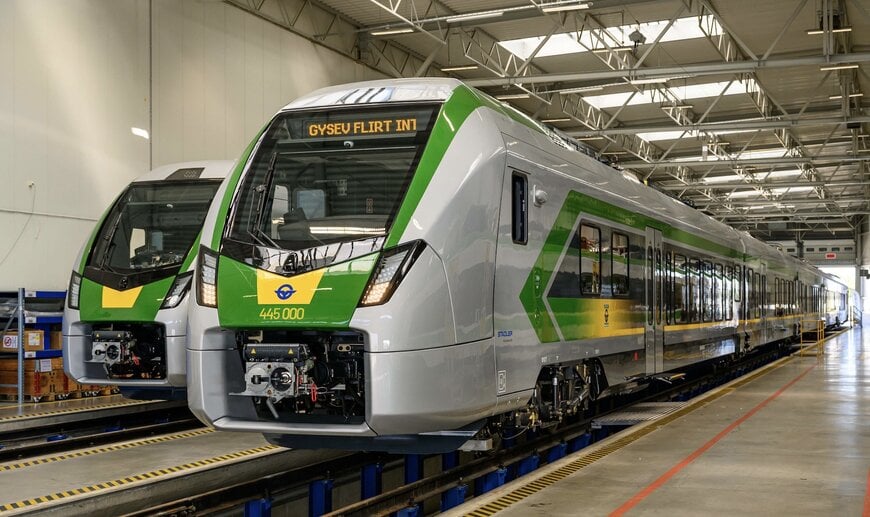
Stadler has completed the first FLIRT InterCity electric multiple unit for GYSEV Ltd., launching an 11-vehicle rolling stock procurement project aimed at modernizing long-distance rail transport. This manufacturing cooperation introduces dual-system rail architecture to Hungarian passenger routes, facilitating direct transit across electrified lines in Central Europe while replacing legacy equipment with integrated, high-capacity systems.
Rolling Stock Procurement and Dual-System Architecture
Manufactured at the production facility in Siedlce, Poland, the five-car electric multiple units are the first dedicated InterCity trainsets procured for the Hungarian market in three decades. The trains are engineered for a maximum operational speed of 160 km/h and utilize a dual-system electrical architecture. This dual-voltage capability allows the fleet to operate seamlessly across the domestic Hungarian rail network and extend services into neighboring Austria without requiring locomotive changes at border crossings, reducing overall transit times.
The fleet deployment will primarily strengthen InterCity services on the Sopron–Budapest and Szombathely–Budapest routes. To support this cross-border operational profile, the newly completed unit will undergo comprehensive trial runs and homologation processes in Romania, the Czech Republic, and Hungary to secure necessary regulatory approvals before entering active passenger service in 2027.
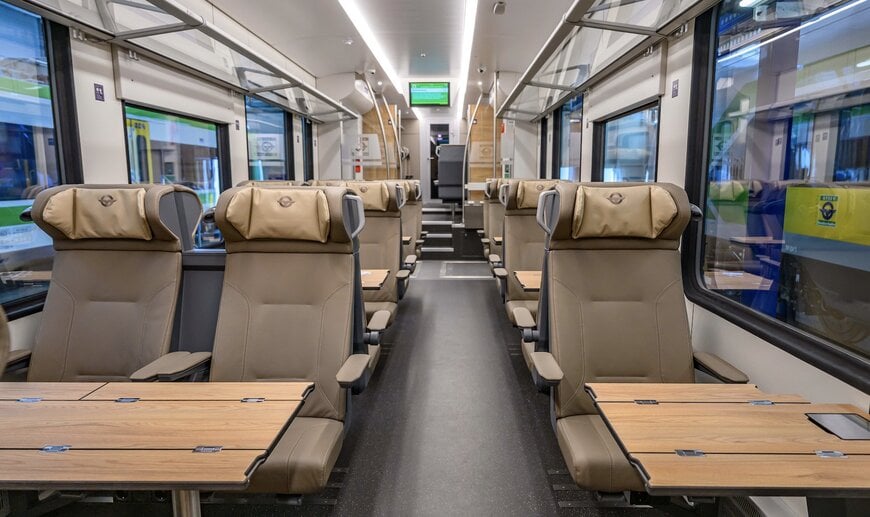
Passenger Infrastructure and Modular Interior Configurations
The physical trainsets integrate modern safety and accessibility standards to meet contemporary railway modernization requirements. The low-floor architecture facilitates boarding, and the design incorporates dedicated first- and second-class accommodations alongside a bistro area equipped with automated food and beverage vending systems.
To manage fluctuating seasonal demand, the interior layout features a modular configuration capable of holding up to 18 bicycles during peak summer travel periods. Electronic passenger amenities include standardized USB-C charging interfaces, Wi-Fi connectivity, and integrated device holders.
Addressing the technical integration of passenger safety and accessibility, Dávid Vitézy, Minister of Transport and Investments for Hungary, noted the operational shifts the fleet brings. "These are the first InterCity trains in Hungary to be fully accessible to passengers with disabilities and equipped with an advanced end-to-end CCTV system," Vitézy stated. "This investment modernizes GYSEV's fleet, sets a benchmark for the Hungarian InterCity network, and aligns with plans to procure additional electric multiple units for the lines operated by MÁV."
Supply Chain and Manufacturing Scale
The integration of these 11 trainsets into the GYSEV fleet builds upon an existing supply chain and production footprint within Hungary. While final assembly occurs in Poland, a significant portion of the global FLIRT carbody manufacturing takes place at the Szolnok plant in Hungary. Of the approximately 6,000 car bodies produced globally for this train family, nearly 4,000 have been manufactured domestically, supporting a steady industrial output for European rail operators. The full GYSEV InterCity fleet is scheduled for complete delivery and deployment by the summer of 2028.
Edited by Aishwarya Mambet, Induportals Editor, with AI assistance.
www.stadlerrail.com
