
railway-international.com
09
'26
Written on Modified on
Integrated Driveline and Digital Condition Monitoring for Rail Fleets
ZF collaborates with rail operators and rolling stock manufacturers to integrate driveline hardware with digital condition monitoring systems.
www.zf.com
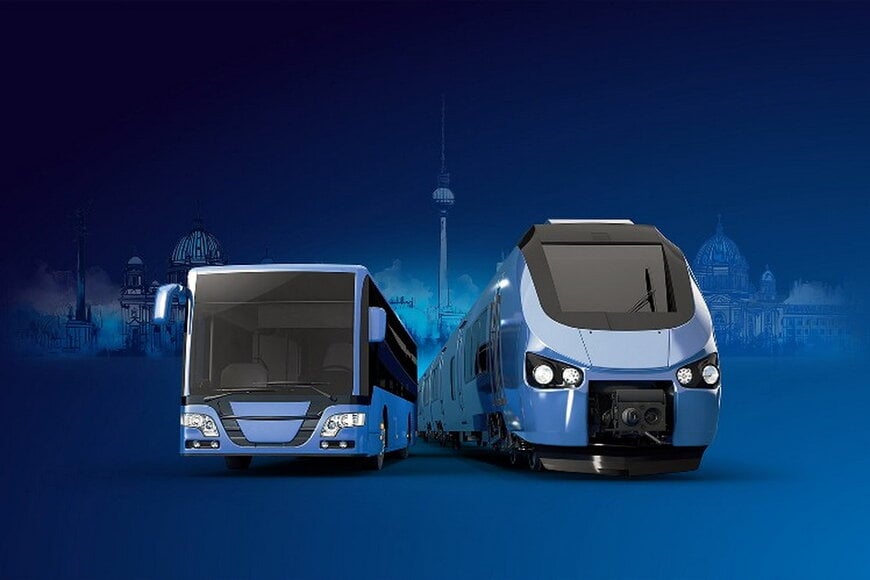
ZF Friedrichshafen AG is partnering with global passenger and freight rail operators and rolling stock manufacturers to implement integrated mechanical drive systems and digital condition monitoring. This cooperative approach targets regional, urban, and high-speed rail networks to optimize lifecycle maintenance, improve energy efficiency, and raise operational availability.
Operational Challenges and Collaboration Architecture
Railway operators face high mechanical loads, diverse climate conditions, and stringent availability targets across varying network profiles. High-speed rail operations running between 250 and 450 km/h subject mechanical transmission components to severe continuous stresses, while regional networks require lower fuel consumption and reduced maintenance intervals.
Addressing these varied mechanical and digital challenges requires engineering integration across the entire lifecycle. Vehicle manufacturers design bogie and drivetrain interfaces, while rail operators provide operational telemetry, route profiles, and service validation data. ZF integrates mechanical transmissions, damping units, and IoT sensors into functional assemblies that align with operator infrastructure.
Technical Integration and Core Mechanisms
The mechanical foundation comprises application-specific gear units, including helical gear drives for high-speed rail applications up to 450 km/h, modular transmissions for commuter rail, and single-stage spur gear drives engineered for high ambient temperature variations and rough terrains. Ride stability and vehicle guidance are controlled via primary dampers, yaw dampers, and mechanical torque rods integrated into bogie assemblies.
Data integration is handled through the connect@rail condition monitoring platform. The system operates via wireless sensor nodes that measure acceleration, vibration, and temperature signatures on wheelsets, gearboxes, and track infrastructure. Real-time data feeds into centralized diagnostic algorithms, allowing engineering teams to identify mechanical wear patterns prior to component failure.
For diesel-powered railcars, retrofit integration utilizes powershift transmissions to replace hydrodynamic systems. Mechanically linked power transmission reduces internal fluid friction, cutting diesel consumption by up to 20% depending on operational duty cycles.
Implementation and Technical Impact
Deployments are executed in direct cooperation with transport authorities. Field implementations include high-speed lines in China with over 14,000 gearbox units in active revenue service, alongside regional railway networks in India.
For fleet modernization, ZF Aftermarket provides retrofit engineering directly at operator depot facilities. Technicians adapt mechanical mounts, calibrate electronic control units, and integrate condition monitoring telematics into existing depot supervisory control systems. In road-based public transit interfaces, complementary electrification is deployed using electric central drives supplying up to 380 kW continuous output alongside telematics fleet integration.
Technical solutions will be presented at InnoTrans in Berlin, Germany (September 22–25, 2026), focusing on predictive maintenance workflows and mechanical driveline performance.
Edited by Evgeny Churilov, Induportals Media - Adapted by AI.
www.zf.com
