
railway-international.com
16
'26
Written on Modified on
FS Logistix orders eight Stadler EUROLIGHT Dual Locomotives
The locomotives will enable the company to enhance the efficiency, flexibility and sustainability of its services across the national network.
stadlerrail.com
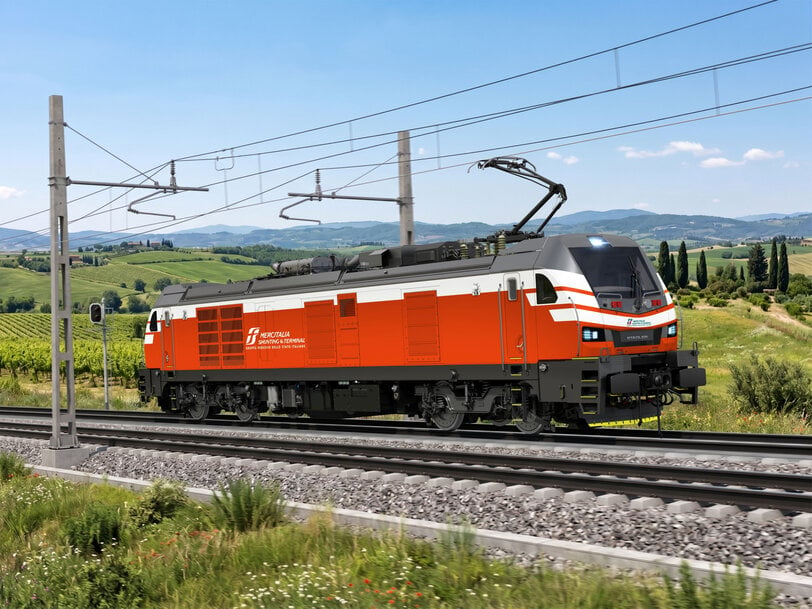
FS Logistix, the logistics division of the FS Italiane Group, has selected Stadler's EUROLIGHT Dual bi-mode locomotive platform for its subsidiary Mercitalia Shunting & Terminal. Comprising an order of eight units, the procurement forms part of an asset renewal strategy designed to improve operational efficiency, route flexibility, and environmental performance across Italy's freight network.
Bi-Mode Propulsion and Technical Specifications
Developed specifically for the infrastructure specifications of the Italian rail network, the EUROLIGHT Dual features a bi-mode propulsion architecture combining 3 kV DC overhead catenary electric traction with an EU Stage V diesel combustion engine. This dual configuration permits seamless transitions between electrified corridors and non-electrified branch lines or intermodal yards without locomotive swaps.
Configured in a four-axle Bo'Bo' wheel arrangement, the locomotive features a reduced axle load of 20 tonnes to ensure route availability across both primary trunk routes and secondary rail lines. Operating in electric mode, the system delivers up to 3 MW of power alongside a maximum starting tractive effort of 330 kN.
Signaling Integration and Regenerative Efficiency
Network integration and safety certification are supported through factory installation of baseline train protection systems, including the European Train Control System (ETCS) Baseline 3 Release 2 (B3R2), alongside national legacy systems Sistema di Controllo della Marcia del Treno (SCMT) and Sistema Supporto Condotta (SSC).
When running under active overhead lines, the locomotive operates purely on electric traction to lower diesel fuel consumption, reduce combustion emissions, and limit localized noise levels. Energy recovery is further supported by an electrodynamic regenerative braking architecture that returns electrical power into the 3 kV DC catenary during deceleration phases.
Edited by Romila DSilva, Induportals Editor, with AI assistance.
www.stadlerrail.com
