
railway-international.com
08
'26
Written on Modified on
Electric FLIRT Trains for Regional Railway Electrification
Stadler and the Autonomous Region of Valle d'Aosta deployed six electric FLIRT trains to replace diesel traction on the Turin-Aosta corridor.
stadlerrail.com
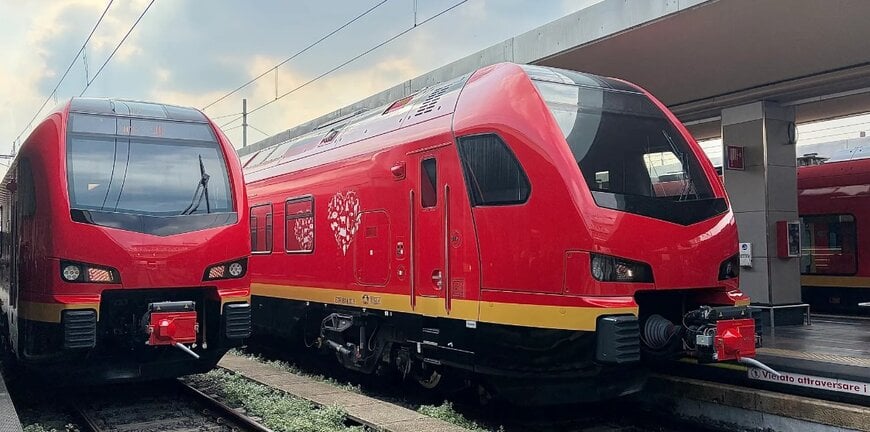
The Autonomous Region of Valle d'Aosta and rolling stock manufacturer Stadler have completed the delivery of six four-car electric multiple units (EMUs) to expand passenger rail capacity across Northern Italy. The deployment integrates zero-emission rolling stock into newly electrified regional digital infrastructure, directly transitioning passenger services away from internal combustion traction.
Operational Challenge and Partner Roles
Operating alpine rail corridors requires balancing high passenger volumes, steep mountain gradients, and strict axle-load constraints. The regional government initiated the transition by financing fleet procurement and aligning vehicle specifications with track electrification schedules. Stadler handled the engineering and manufacturing of the vehicles at its Siedlce plant in Poland, designing rolling stock capable of integrating with existing signaling networks while operating alongside the region's previously deployed bimodal fleet.
Technical Specifications and Vehicle Engineering
The four-car trains are built on the modular FLIRT platform, utilizing lightweight aluminum carbodies to minimize total mass and decrease track wear on winding mountain routes.
Agata Prekurat, Project Manager at Stadler Polska, explained: "The trains for Valle d'Aosta are also characterized by their lightweight aluminium car bodies as well as reduced axle loads to ensure full compatibility and efficient, safe operation throughout the whole rail network, even on mountain routes."
Each unit incorporates the European Train Control System (ETCS) for standardized cab signaling and automatic train protection, achieving a maximum operational speed of 160 km/h. Boarding architecture features four wide low-floor passenger doors per side to reduce dwell times at stations and maintain level-boarding accessibility. The interior layout provides 236 seats alongside dedicated stowage capacity for high-volume sports equipment and bicycles.
Network Integration and Lifecycle Maintenance
The trains are entering commercial service in coordinated phases aligned with infrastructural electrification milestones along the Ivrea–Aosta line. To support long-term fleet availability and reliability, Stadler established a five-year maintenance contract executed in partnership with rail operator Trenitalia. This support structure covers preventive servicing, lifecycle materials, and dedicated on-site technician teams to sustain operational tolerances.
Energy Transition and Operational Impact
Replacing diesel-powered operations with full overhead electrification and electric multiple units eliminates direct tailpipe emissions along the route. The operational model yields a reduction in fuel consumption exceeding 500,000 liters of diesel annually. Operating the standardized FLIRT platform also streamlines regional fleet management by sharing technical commonalities, maintenance procedures, and component inventories with the region's existing bimodal rolling stock.
Edited by Evgeny Churilov, Induportals Media - Adapted by AI.
www.stadlerrail.com
