
railway-international.com
16
'26
Written on Modified on
Optimized Railcar Systems for Railway Construction Logistics
GATX Rail Europe provides modular railcar configurations to support large-scale rail infrastructure expansion and track renewal projects across Europe.
www.gatx.eu
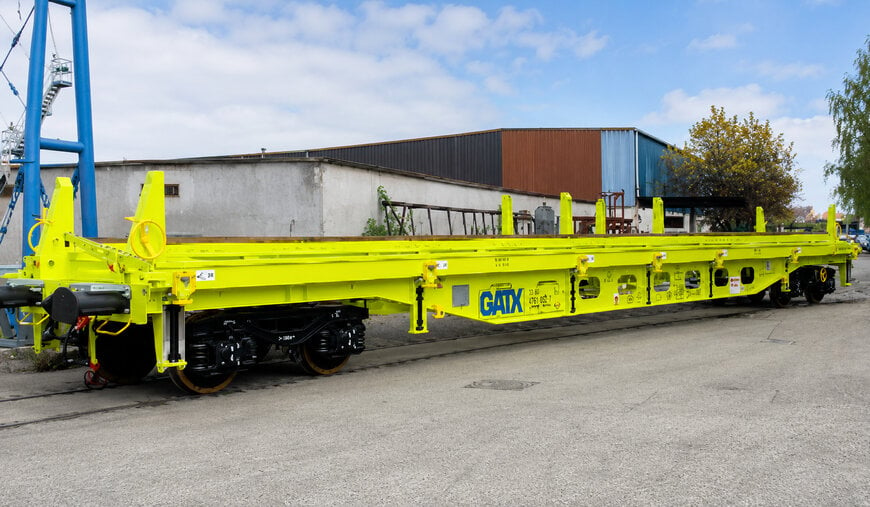
GATX Rail Europe has deployed a suite of specialized, modular railcar solutions optimized for track renewal and railway infrastructure projects across Europe. These systems address the logistical complexities of transporting heavy, time-critical structural materials directly to active trackside zones.
Modular Railcar Topologies for Superstructure Work
Railway infrastructure deployment requires precise material distribution within highly restricted spatial parameters along active rail corridors. To satisfy these operational demands, specialized tipper railcars feature an optimized hydraulic and hose design that facilitates dual-side unloading and controlled tipping outside the ballast track area. These units support a 26-ton capacity per tipping box with a standardized loading height of 2,566 mm to streamline loading protocols. For track renewal workflows, purpose-built sleeper railcars provide height transitions ranging from 900 mm to 1,470 mm, allowing seamless integration between standard freight profiles and dedicated construction trains to minimize component handling.
Multi-Functional and Intermodal Fleet Architectures
To enhance asset utilization across variable cargo requirements, multi-functional railcars integrate floor lashing points that can be opened or recessed depending on the freight configuration. These vehicles feature standard-compliant elevated side walls, optional timber flooring, and floor-level opening flaps to simplify the handling of aggregates, equipment, or vehicles. For maximum payload optimization, lightweight 60-foot intermodal railcars utilize modular superstructures, such as customizable cassettes and interchangeable tipper bodies. This structural approach minimizes deadweight loss while allowing rapid mechanical reconfiguration to match evolving project requirements in road, bridge, and tunnel construction sectors.
System Integration and Infrastructure Logistics
The combination of distinct sleeper, ballast, and multi-functional railcar variants within a unified logistics chain enables construction operators to reduce the total number of required rolling stock types. This systemic approach simplifies site circulation, accelerates project workflows, and improves resource efficiency during high-traffic track upgrades. By modifying existing rolling stock assets and engineering modular transport configurations, the fleet architecture adapts to regional infrastructure modernization programs across Germany, Switzerland, and Northern Europe.
Additional Context: This section details technical specifications and competitive benchmarking not included in the original product announcement
The deployment of modular and intermodal railcar configurations with customizable cassettes represents an industry shift away from single-purpose freight fleets toward highly adaptable rolling stock. Traditional infrastructure maintenance relies heavily on dedicated, fixed-component ballast or sleeper wagons, which can incur significant idle costs outside active construction windows. By utilizing lightweight 60-foot intermodal platforms with interchangeable superstructures, operators can maintain high payload capacities while reducing fleet overhead through cross-sector deployment. Furthermore, dual-side hydraulic tipping systems with precise volumetric control mitigate the need for secondary trackside handling machinery, directly lowering operational energy consumption and improving safety metrics within live-track clearance envelopes.
Edited by Sucithra Mani, Induportals editor – adapted by AI.
www.gatx.eu
