
railway-international.com
16
'26
Written on Modified on
DB Cargo modernises the digital infrastructure of combined transport
The modernisation of key digital systems will establish a more flexible platform for order management, supporting reliable information exchange between customers, terminals and logistics partners.
www.dbcargo.com
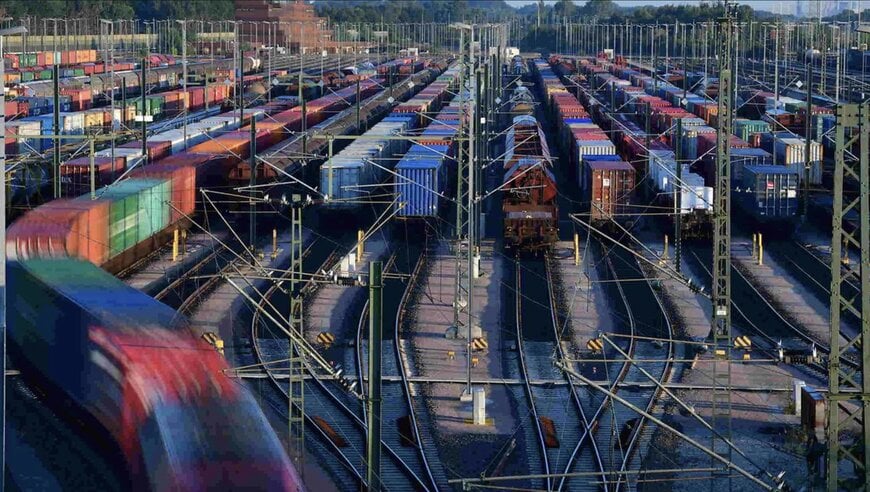
Intermodal and combined rail freight operations—moving standardized ISO containers, swap bodies, and craneable semi-trailers across road, rail, and maritime terminals—depend on continuous, high-volume data synchronization among shippers, freight forwarders, inland terminal operators, seaport authorities, and railway undertakings. For decades, major European rail freight carriers relied on monolithic legacy mainframe and client-server enterprise systems built in the late 1990s to manage consignment bookings, train slot allocations, and terminal gate instructions. While robust for baseline domestic traffic, these aging monolithic architectures struggle to integrate seamlessly with modern API ecosystems, dynamic capacity allocation tools, and cross-border subsidiary networks. Manual intervention in terminal loading orders and rigid electronic data interchange (EDI) mappings create operational friction, delay crane-loading sequences at intermodal hubs, and impede real-time consignment visibility. Overcoming these logistical bottlenecks requires modular, service-oriented order fulfillment platforms capable of automating terminal loading workflows, preserving backward compatibility with existing customer EDI links, and scaling across domestic, maritime, and international rail corridors.
Replacing Legacy Mainframe Infrastructure with Modular Fulfillment Architecture
To modernize the digital backbone of its intermodal freight operations, DB Cargo AG is phasing in the Rail Order Fulfillment Platform (ROFiP), gradually retiring its legacy LPK (Ladungsverkehrs- und Produktionssystem Kombinierter Verkehr) system, which has managed combined transport order processing for over 25 years. Built upon the cOperator logistics software platform from German logistics IT specialist Catkin GmbH and tailored specifically to DB Cargo’s operational requirements, ROFiP establishes an adaptable digital core engineered for networked collaboration across national subsidiaries and external intermodal partners.
Dorothée Appel, Chief Information Officer and Chief Digital Officer at DB Cargo AG, noted that the platform creates an adaptable foundation for future-ready order processing in combined transport, allowing the operator to respond rapidly to shifting market and operational requirements. Following an initial operational milestone in April 2026—when the first national combined transport service was successfully migrated onto ROFiP alongside core interfaces to production and billing systems—DB Cargo is expanding the rollout in November 2026 to encompass additional national continental combined transport routes. Concurrently, terminal loading instructions are transitioning to largely automated execution directly via ROFiP. Crucially, to prevent disruption for freight customers already transmitting order bookings electronically, existing customer EDI and API data-exchange interfaces remain completely unchanged, with incoming messages routed transparently to ROFiP in the background.
Phased Rollout Across Maritime and International Corridors Through 2027
Following the migration of national continental services, DB Cargo will extend ROFiP across deep-sea maritime and cross-border rail networks during 2027. Upcoming development stages will establish direct digital links with major seaport container terminals while deploying the functional architecture required to manage complex multi-country international intermodal services. Full migration of all continental and maritime combined transport services is scheduled for completion by the end of 2027, systematically retiring legacy infrastructure while strengthening end-to-end digital connectivity across European rail freight networks.
Additional Context
This section details technical specifications and competitive benchmarking not included in the original product announcement.
In European intermodal rail freight operations governed by the European Union Agency for Railways Technical Specifications for Interoperability relating to Telematics Applications for Freight (TAF TSI), cross-border consignment management relies on standardized digital messaging schemas—such as EDIFACT messages (including IFTMIN for transport instructions and CODECO/COARRI for container gate and discharge reports) alongside modern RESTful JSON APIs and XML standards. In combined transport terminals, automated loading instructions require synchronizing Intermodal Loading Unit (ILU) codes, gross mass weights, dangerous goods classifications (RID), and wagon pocket geometries with terminal operating systems (TOS) so gantry cranes and reach stackers can sequence train loading within tight departure slots. Transitioning from legacy systems like LPK to a modular cloud-ready platform such as Catkin’s cOperator decouples external customer messaging brokers from internal train-formation, capacity-management, and SAP-based billing engines, enabling event-driven status updates without forcing shippers to re-engineer established enterprise resource planning integrations.
Within the European rail freight and intermodal digitalization sector, DB Cargo’s ROFiP deployment benchmarks directly against enterprise intermodal operating platforms utilized by major European rail operators and intermodal specialists, including Hupac (operating its Wolf and integrated intermodal booking platforms), Kombiverkehr (deploying its KV 4.0 digital data hub), Rail Cargo Group (utilizing the MIKE digital logistics platform), SBB Cargo (rolling out its customer-facing CIS and automated capacity systems), and specialized commercial intermodal software suites such as Modality Systems and Navis. While dedicated neutral intermodal operators like Hupac and Kombiverkehr focus heavily on neutral terminal-to-terminal shuttle slot brokerage across Alpine corridors, DB Cargo must coordinate massive mixed continental, automotive, and deep-sea hinterland flows across both domestic German hubs and international subsidiaries (such as DB Cargo Eurasia and European national units). By adapting Catkin’s cOperator framework rather than building a bespoke monolithic system from scratch, DB Cargo accelerates time-to-market for automated terminal loading while aligning ROFiP with its broader digital ecosystem, including the link2rail customer portal and the European Production Fulfillment System (EPS).
Edited by Romila DSilva, Induportals Editor, with AI assistance.
www.dbcargo.com
